
Tag: red winged blackbird
Red-winged Blackbirds And Fall Colors
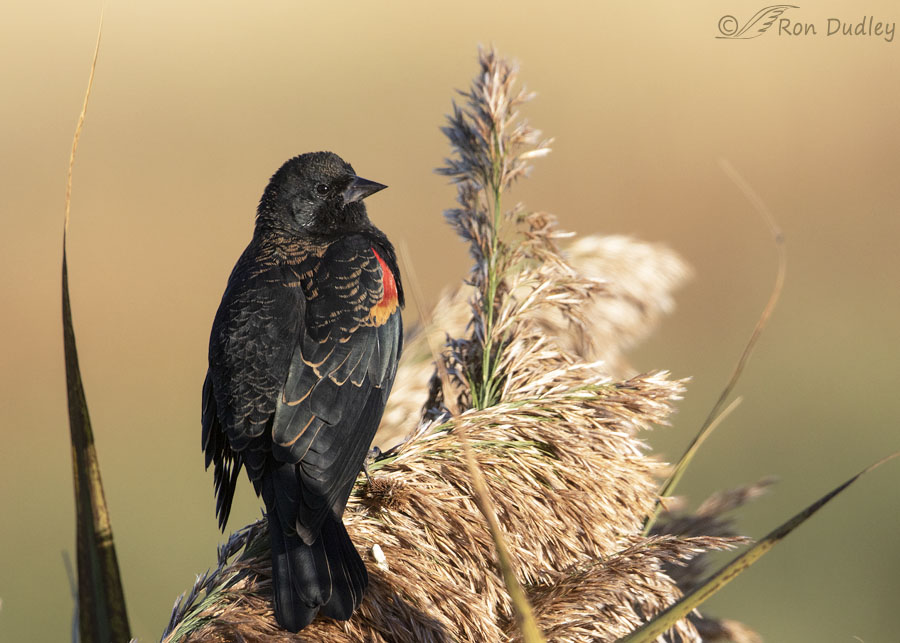
Some simple shots of a common species and further evidence that followers of Feathered Photography have big hearts.
Male Red-winged Blackbird In Flight
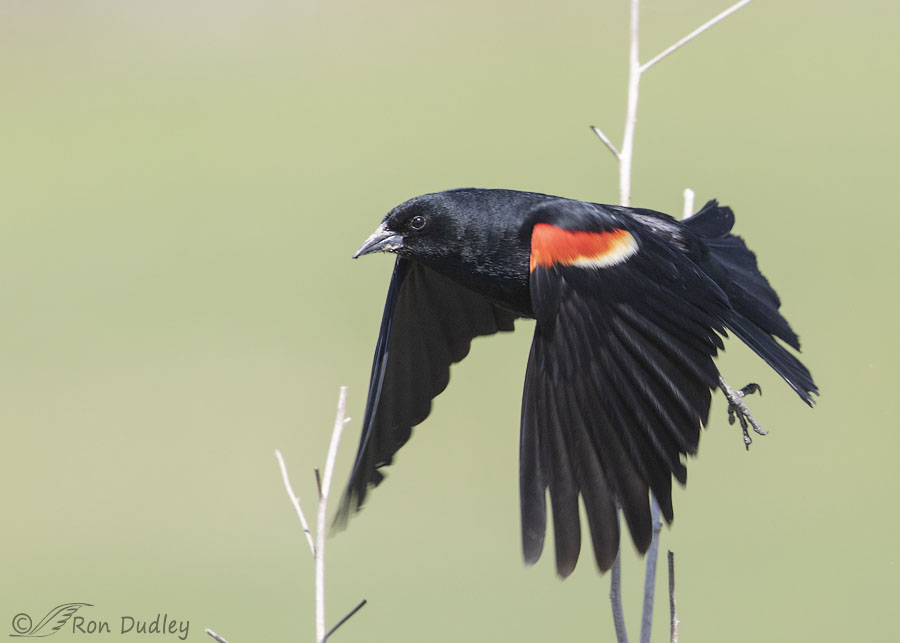
Another reason I tend to shoot at higher shutter speeds than most bird photographers and this time it still wasn’t enough.
Odds And Ends From Recent Trips To Farmington Bay WMA
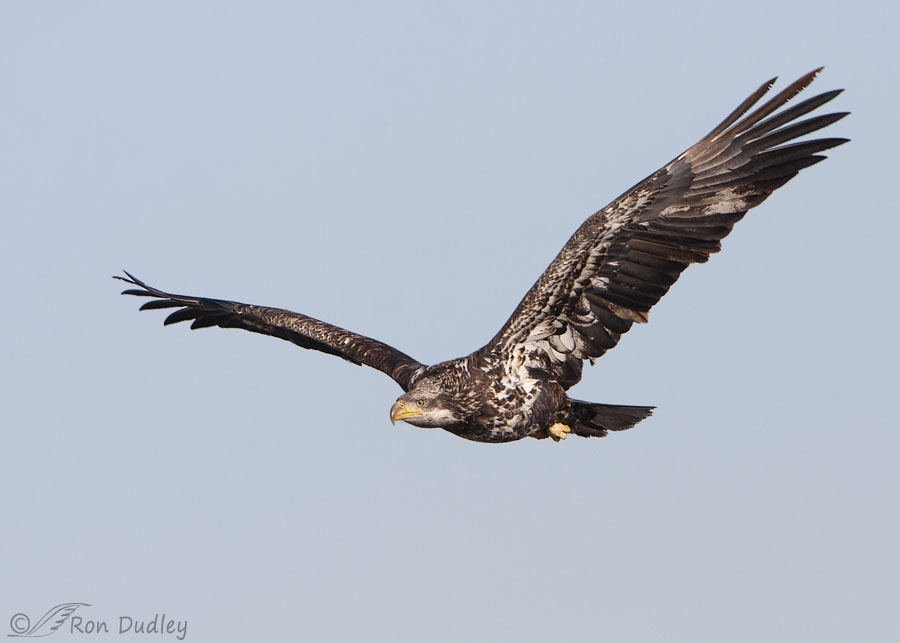
Blackbirds, grebes, eagles, assorted ducks and a photographic calamity – bits and pieces of recent shooting forays to Farmington Bay.
Red-tailed Hawk With A “Double-decker” Upper Bill
Antelope Island Potpourri From Yesterday Morning
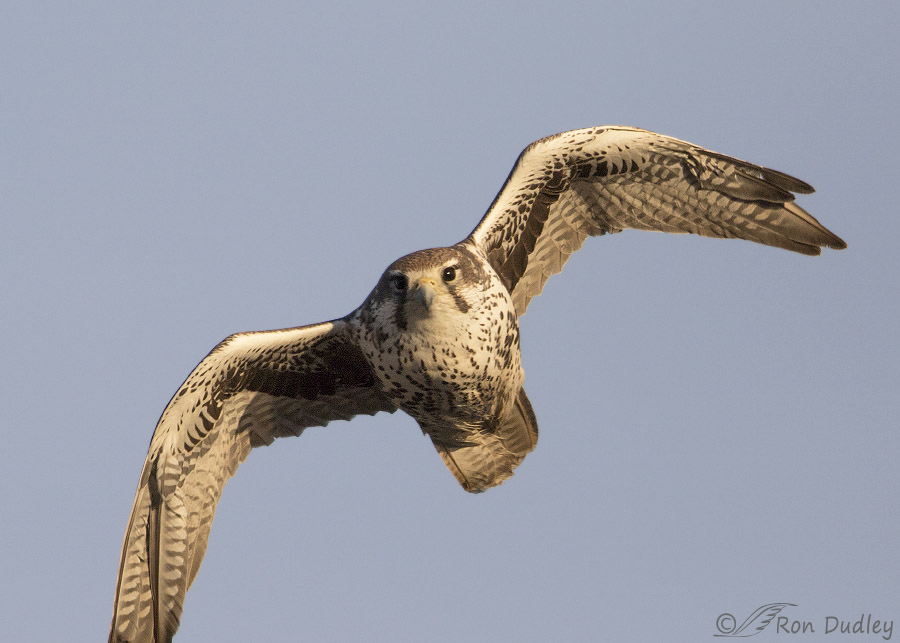
Including an American Goldfinch, a Red-winged Blackbird and a Prairie Falcon in flight.
Red-winged Blackbird Trying To Get At Those Pesky Sunflower Seeds
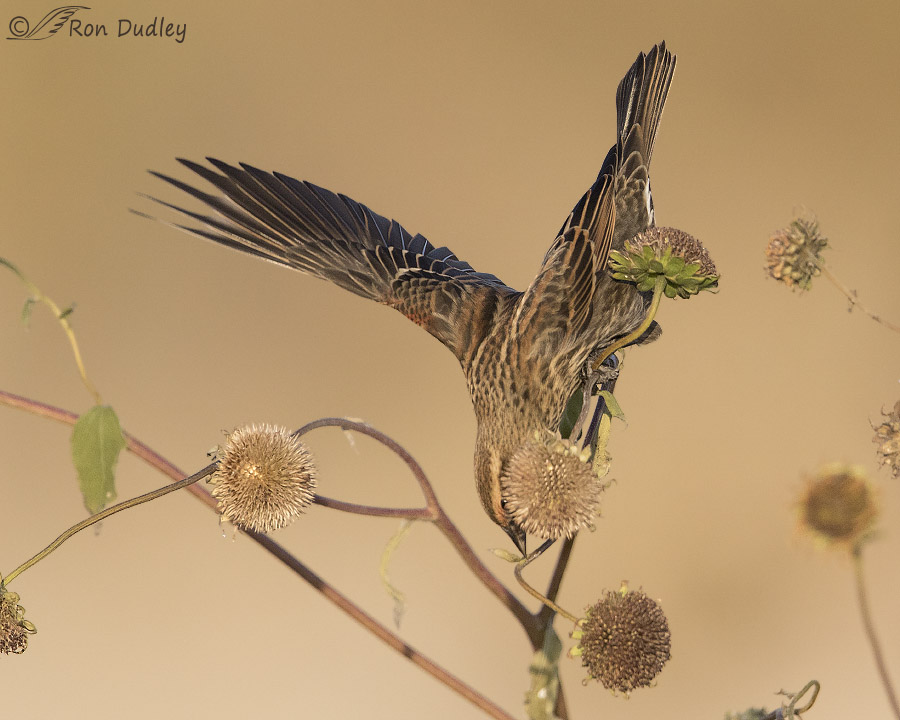
The seeds were still on the wild plants and they weren’t easy to reach which resulted in some fun photos.
Female Red-winged Blackbird Basking In The Warming Sun
A Couple Of Blackbirds (two species)
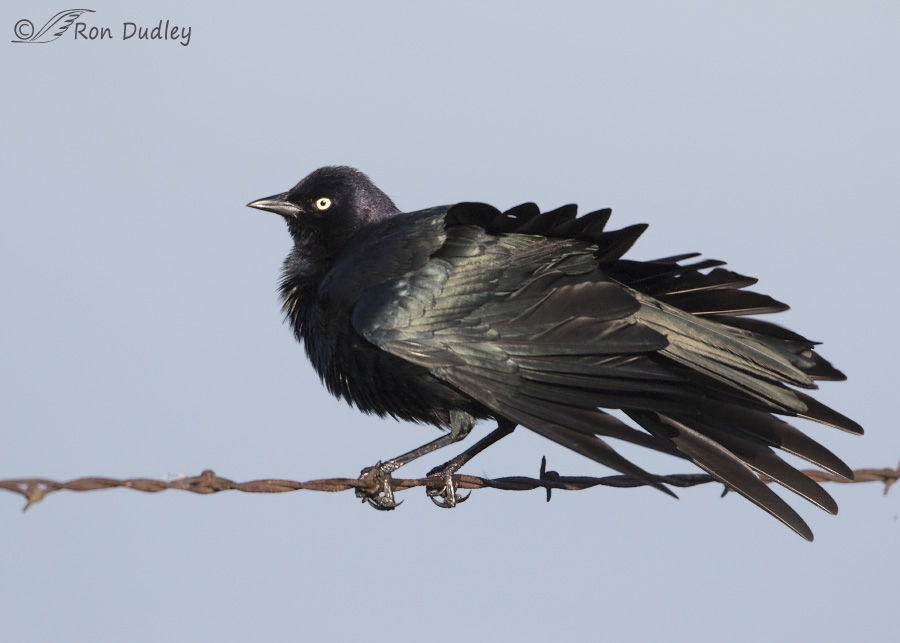
The Farmington area is hopping with blackbirds right now and many of them are displaying as if it were springtime.
Peachy Female Red-winged Blackbird (and my FOY Swainson’s Hawk)
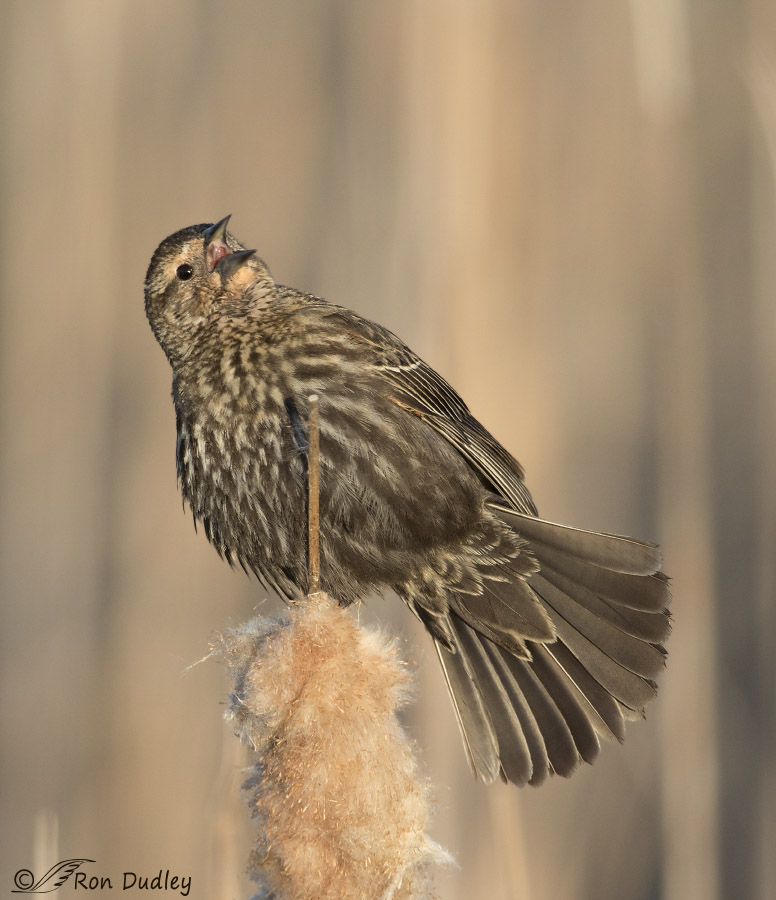
Male Red-winged Blackbirds are so distinctive in color and pattern as to be instantly recognizable by most but the mottled brown female often goes unrecognized or even mistaken for a large sparrow.
Birds Being Fooled By Our Warm Winter?
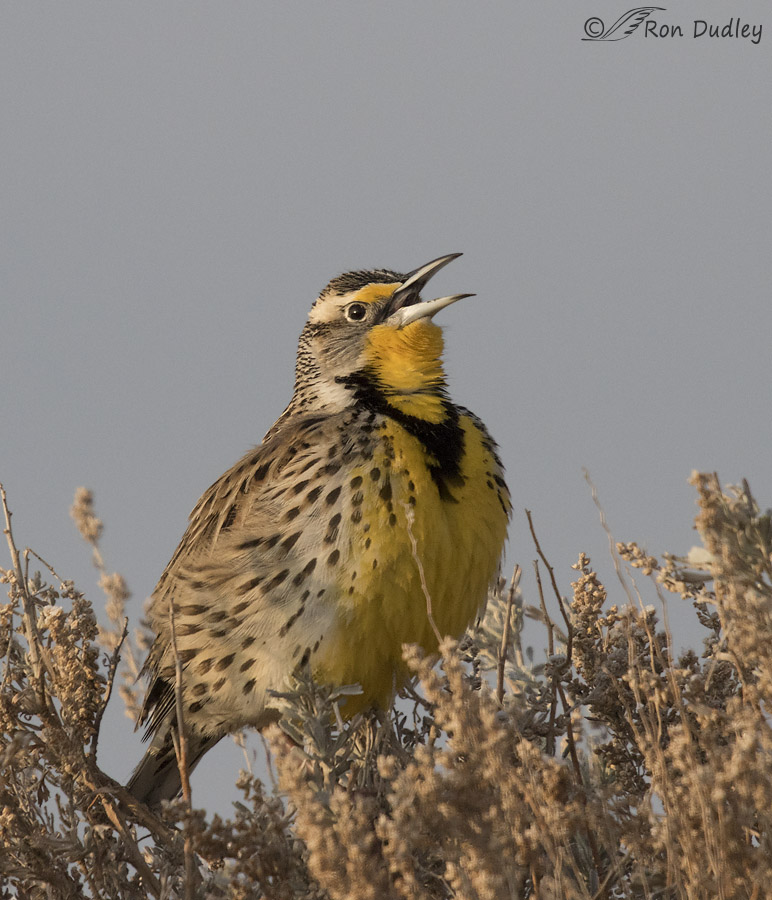
Based on what I’m seeing in the field I’m wondering if some birds aren’t being tricked into spring activities too early.
Red-winged Blackbird (with a look at exposure and depth of field)
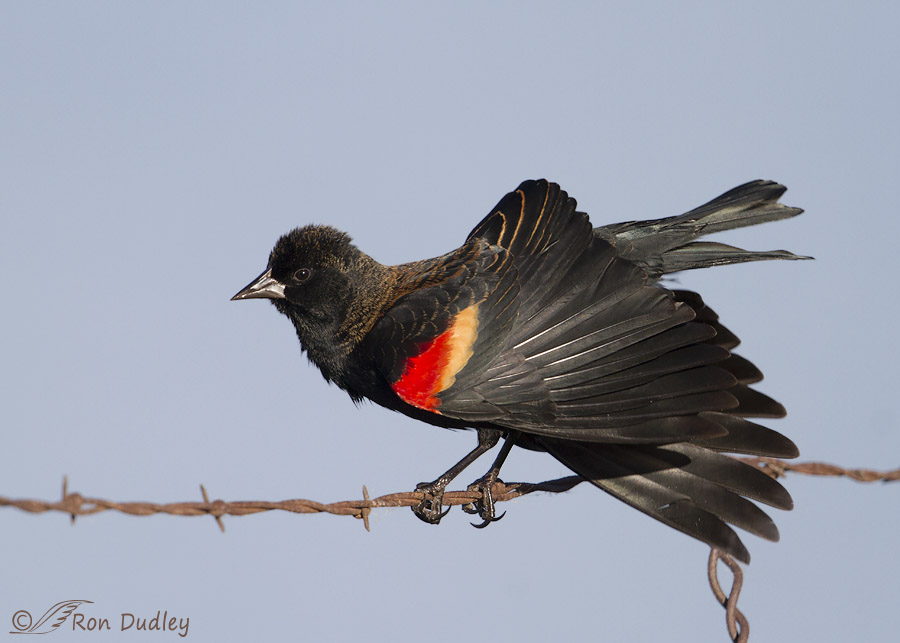
Black birds of any species are generally a tough exposure. Throw in the bright red and yellow epaulets of the Red-winged Blackbird and the challenge can be even more daunting.
Red-winged Blackbird In Flight
White-crowned Sparrows – Sunflower Gluttony And Crossed Bills
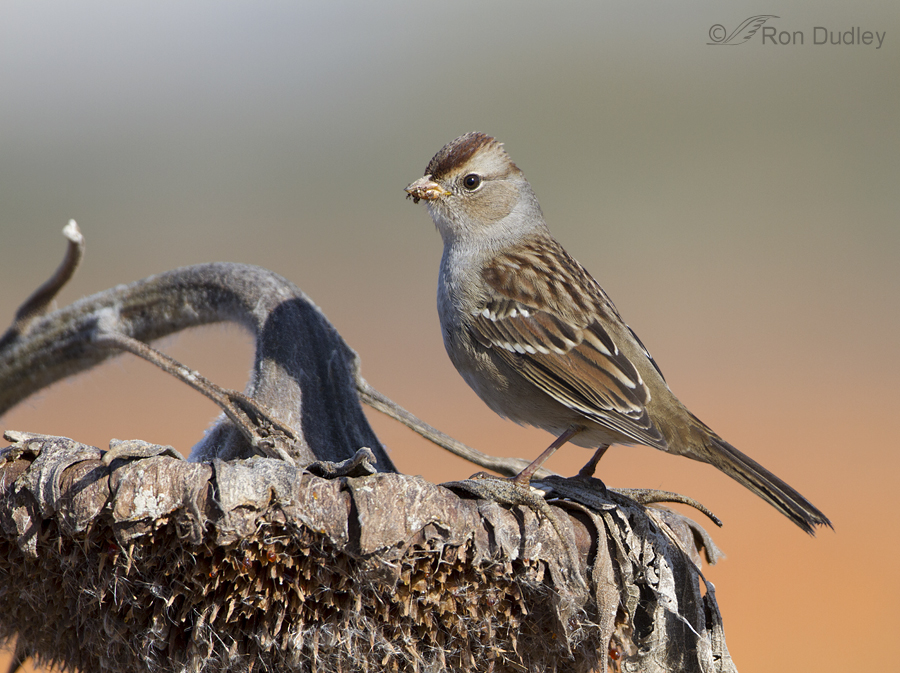
A local pumpkin farmer (Pack Farms) plants sunflowers along the periphery of his pumpkin field and each fall they provide a messy bounty for a variety of birds. Most species seem to be tidy eaters but the juvenile White-crowned Sparrows are an exception.
The orange in the background of these shots is – you guessed it – pumpkins.
Bill Deformities
I’m seeing more bill deformities “out there” than I used to and that disturbs me. The latest example was a Sage Thrasher we found on Antelope Island four days ago. This is what a normal bill on a Sage Thrasher looks like. Notice that the upper mandible is slightly longer than the lower one with a curved tip at the terminus and that both mandibles fit together tightly showing no evidence of a gap between them. But in this thrasher the upper mandible is significantly shorter than the lower and the curve of the two mandibles doesn’t match so they don’t fit together well, leaving a gap. This is definitely not a temporary, voluntary position of the bill as I have about a dozen shots of the bird over a period of about a minute that show the same thing. The two mandibles never fit together cleanly and the upper one is definitely shorter. With this head turn you can see the other side. I can only imagine how this would interfere with normal preening as the bird attempts to draw the individual feathers through the bill to lock the barbs together. An extreme crop of the previous image. Notice how the back of the mandibles touch each other and prevent the rest of the bill from coming together because their curves don’t match along the entire length of the bill. At first I thought that the end of the lower mandible looked damaged or eroded but perhaps there’s just something on the bill that…
-

Red-winged Blackbirds And Fall Colors
Some simple shots of a common species and further evidence that followers of Feathered Photography have big hearts.
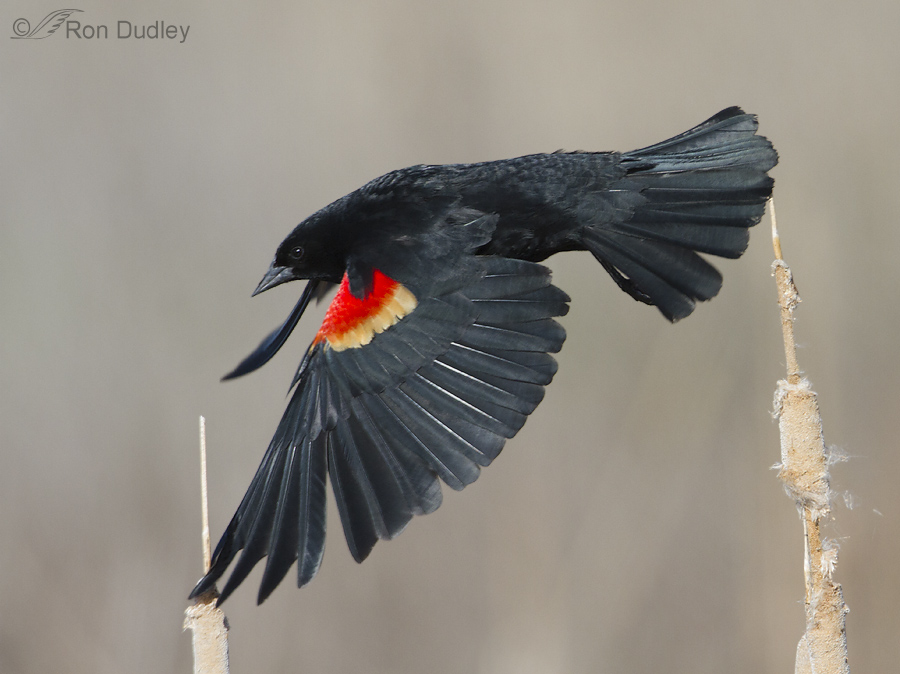
Male Red-winged Blackbird In Flight
Another reason I tend to shoot at higher shutter speeds than most bird photographers and this time it still wasn’t enough.
Odds And Ends From Recent Trips To Farmington Bay WMA
Blackbirds, grebes, eagles, assorted ducks and a photographic calamity – bits and pieces of recent shooting forays to Farmington Bay.
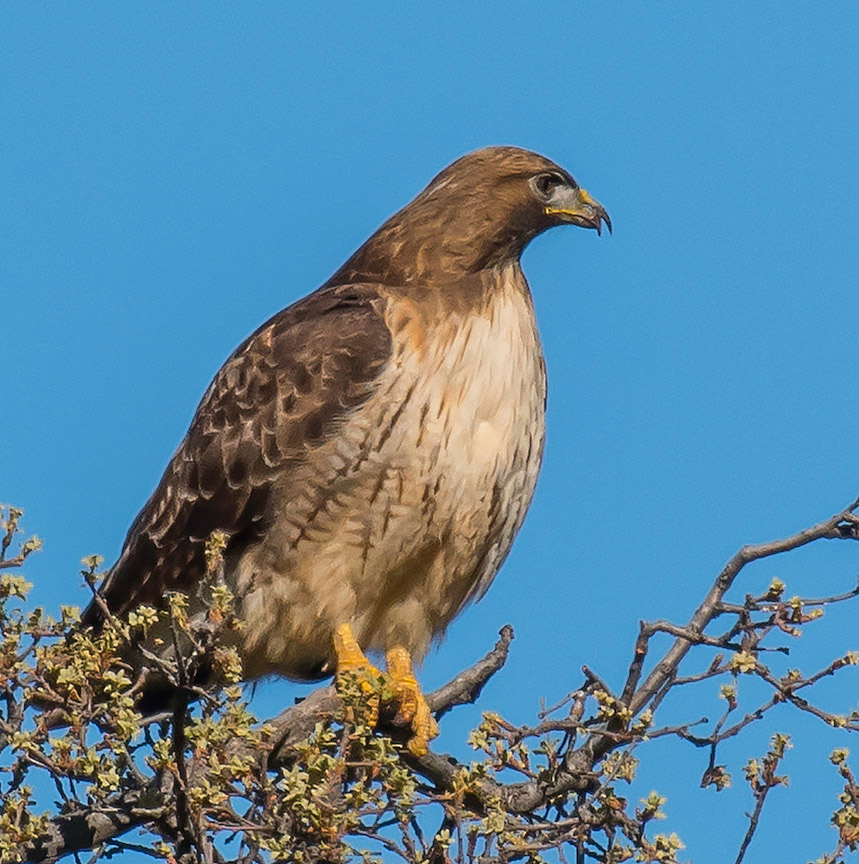
Red-tailed Hawk With A “Double-decker” Upper Bill
Antelope Island Potpourri From Yesterday Morning
Including an American Goldfinch, a Red-winged Blackbird and a Prairie Falcon in flight.
Red-winged Blackbird Trying To Get At Those Pesky Sunflower Seeds
The seeds were still on the wild plants and they weren’t easy to reach which resulted in some fun photos.
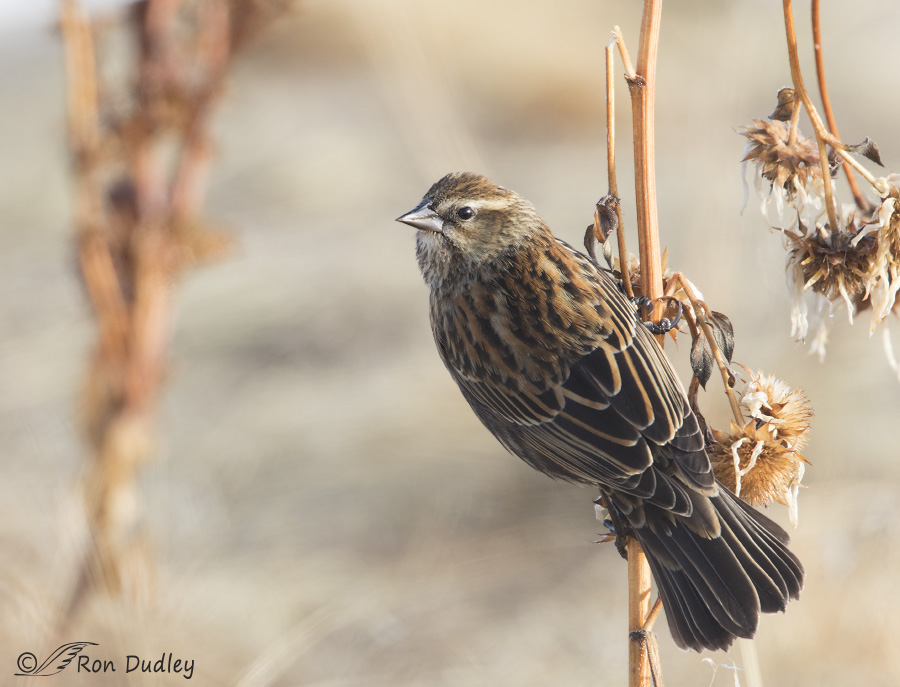
Female Red-winged Blackbird Basking In The Warming Sun
A Couple Of Blackbirds (two species)
The Farmington area is hopping with blackbirds right now and many of them are displaying as if it were springtime.
Peachy Female Red-winged Blackbird (and my FOY Swainson’s Hawk)
Male Red-winged Blackbirds are so distinctive in color and pattern as to be instantly recognizable by most but the mottled brown female often goes unrecognized or even mistaken for a large sparrow.
Birds Being Fooled By Our Warm Winter?
Based on what I’m seeing in the field I’m wondering if some birds aren’t being tricked into spring activities too early.
Red-winged Blackbird (with a look at exposure and depth of field)
Black birds of any species are generally a tough exposure. Throw in the bright red and yellow epaulets of the Red-winged Blackbird and the challenge can be even more daunting.
Red-winged Blackbird In Flight
White-crowned Sparrows – Sunflower Gluttony And Crossed Bills
A local pumpkin farmer (Pack Farms) plants sunflowers along the periphery of his pumpkin field and each fall they provide a messy bounty for a variety of birds. Most species seem to be tidy eaters but the juvenile White-crowned Sparrows are an exception.
The orange in the background of these shots is – you guessed it – pumpkins.
Bill Deformities
I’m seeing more bill deformities “out there” than I used to and that disturbs me. The latest example was a Sage Thrasher we found on Antelope Island four days ago. This is what a normal bill on a Sage Thrasher looks like. Notice that the upper mandible is slightly longer than the lower one with a curved tip at the terminus and that both mandibles fit together tightly showing no evidence of a gap between them. But in this thrasher the upper mandible is significantly shorter than the lower and the curve of the two mandibles doesn’t match so they don’t fit together well, leaving a gap. This is definitely not a temporary, voluntary position of the bill as I have about a dozen shots of the bird over a period of about a minute that show the same thing. The two mandibles never fit together cleanly and the upper one is definitely shorter. With this head turn you can see the other side. I can only imagine how this would interfere with normal preening as the bird attempts to draw the individual feathers through the bill to lock the barbs together. An extreme crop of the previous image. Notice how the back of the mandibles touch each other and prevent the rest of the bill from coming together because their curves don’t match along the entire length of the bill. At first I thought that the end of the lower mandible looked damaged or eroded but perhaps there’s just something on the bill that…