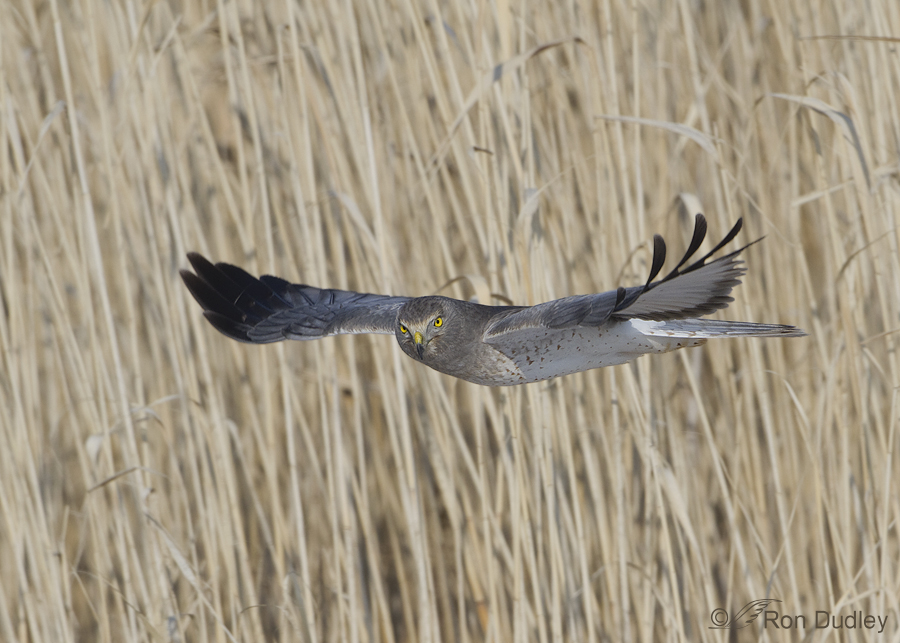
A Menacing Look From A Male Northern Harrier
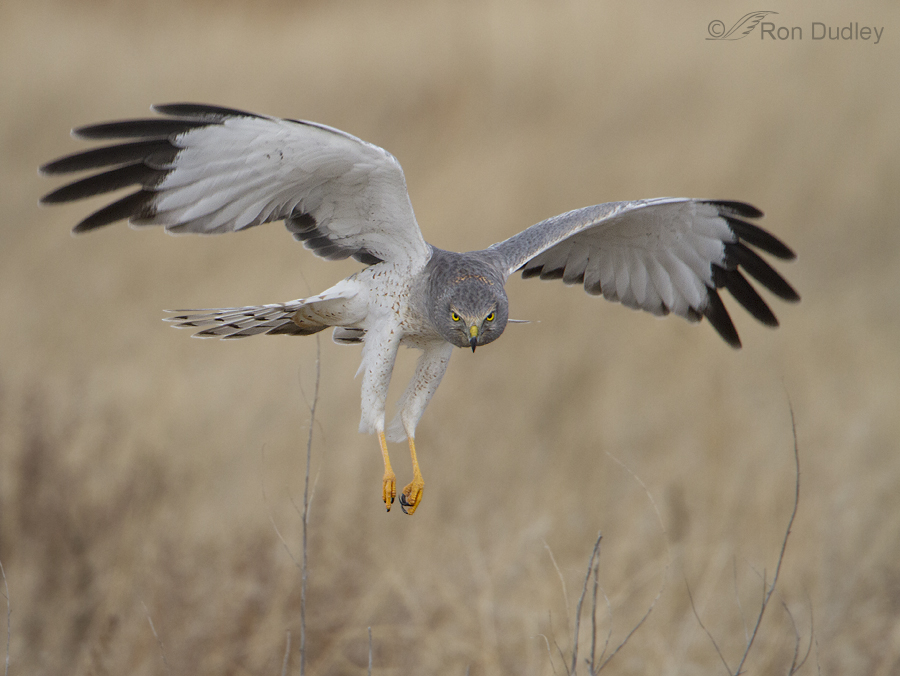
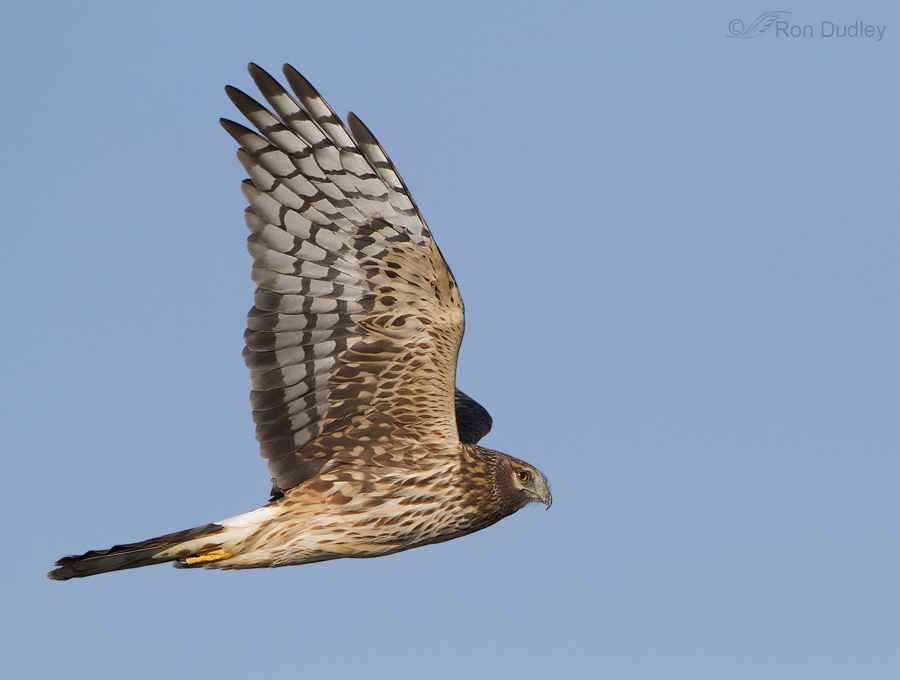
When Northern Harriers choose to hunt along the edges of the dirt roads I frequent they sometimes give me interesting looks as they pass by. This is one of them.

When Northern Harriers choose to hunt along the edges of the dirt roads I frequent they sometimes give me interesting looks as they pass by. This is one of them.
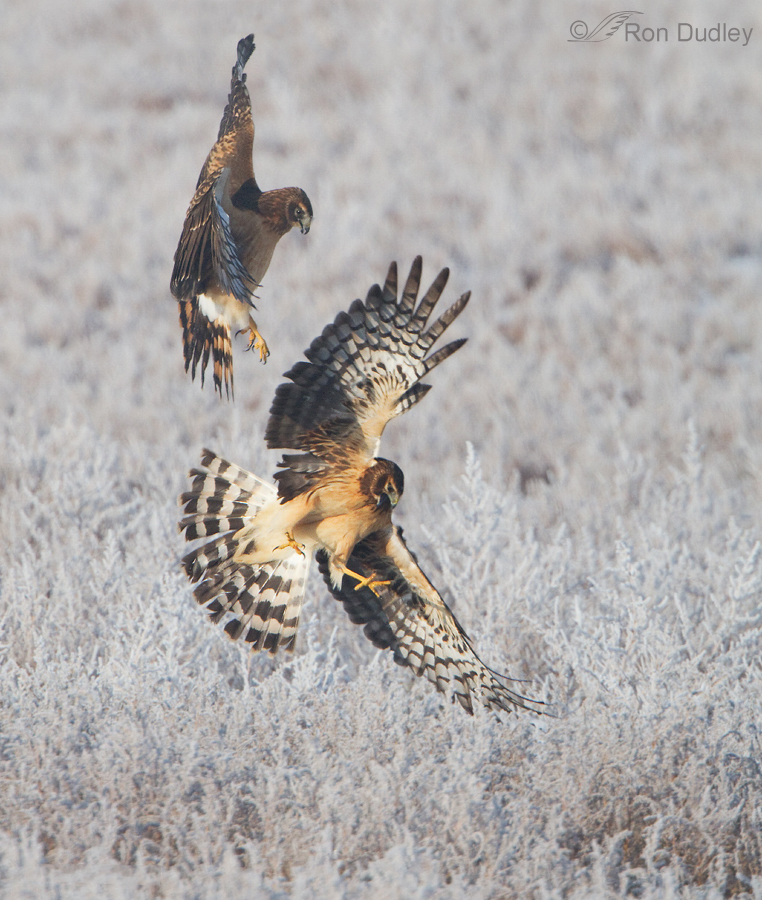
The seriousness of confrontations between Northern Harriers varies with the situation. Conflicts over food, especially during harsh winters, can be intense and dramatic but they often seem to spar with each other just for the “fun” of it. I’ve often seen and occasionally photographed both extremes of aggressive behavior.
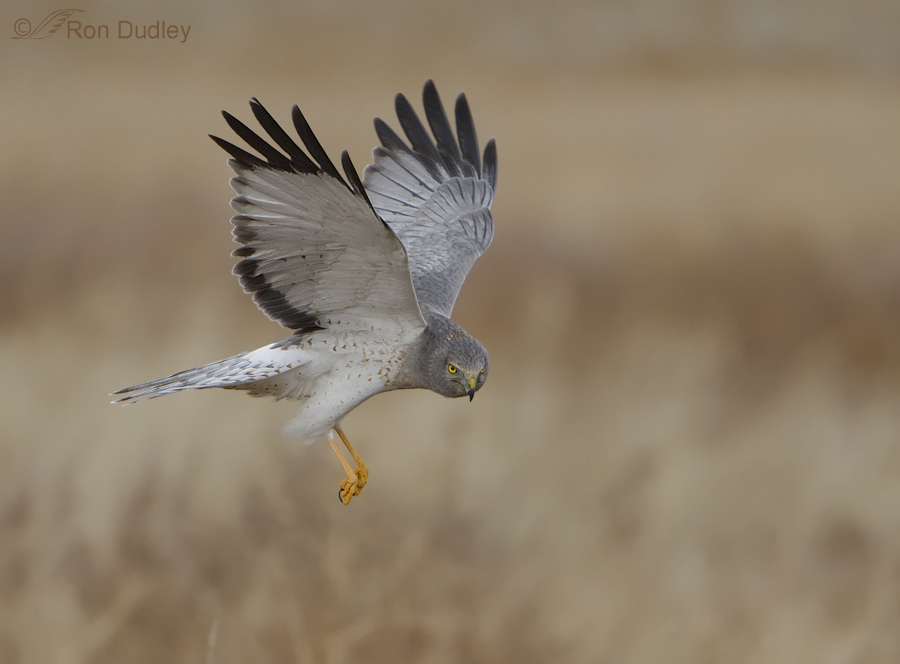
I’ve been photographing Northern Harriers for years now and I still get a thrill whenever I can get close to one of these shy hawks. And if it’s an elusive adult male (the “Gray Ghost”), well that’s just icing on the cake.
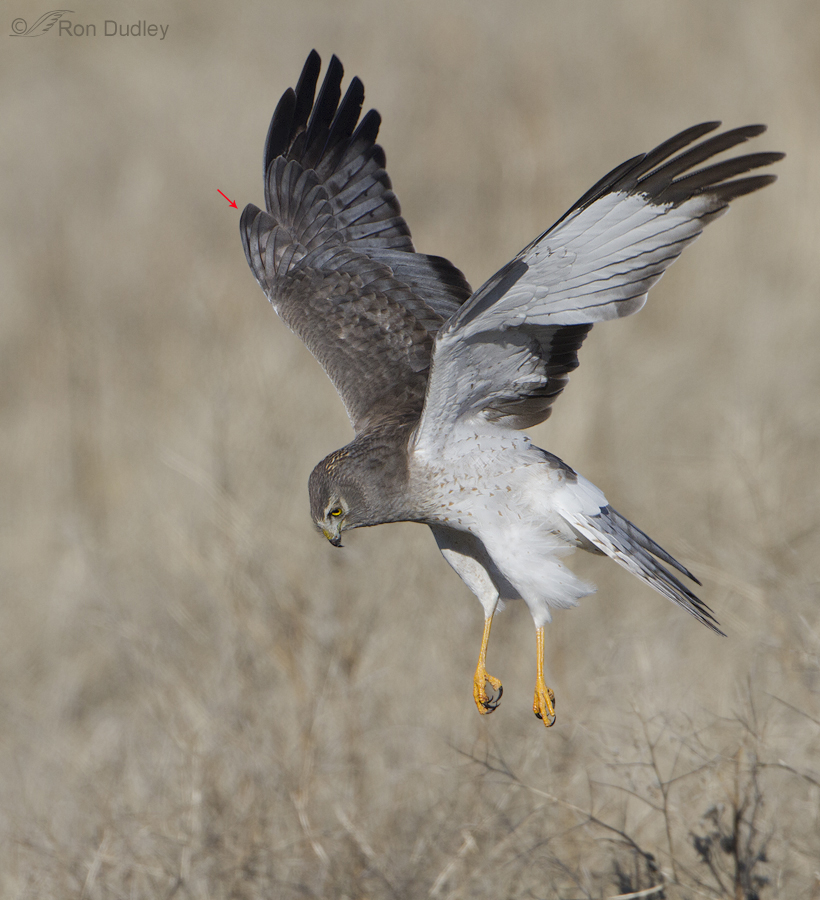
When hunting, Northern Harriers have a distinctive buoyant flight. They glide with wings held in a strong dihedral and have low wing loading which allows them to fly low and slow as they search for prey. When watching them hunt there are times I think they’re going to fall right out of the air.
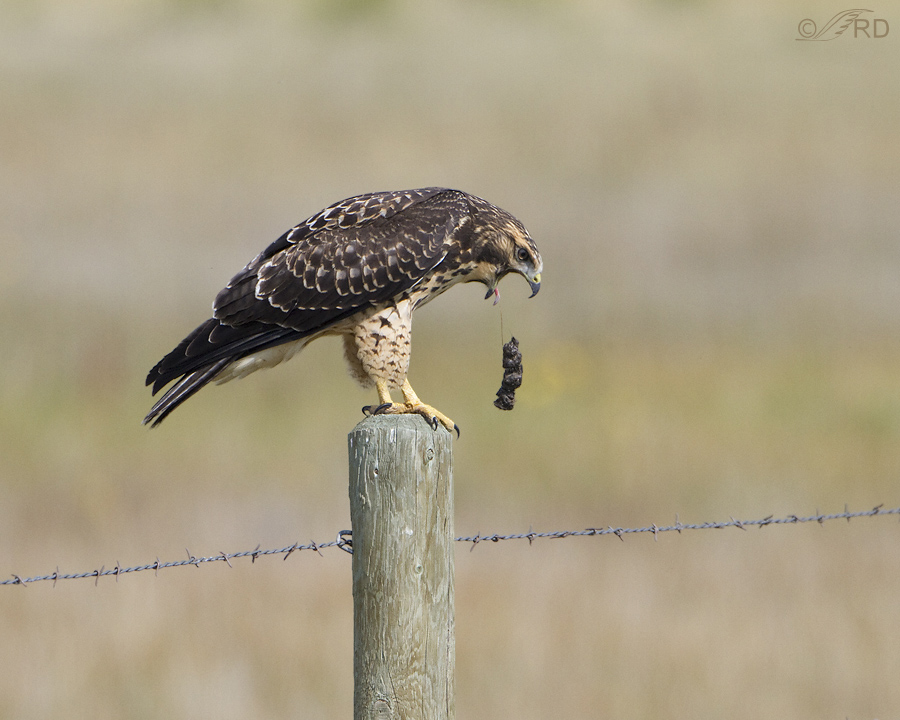
I’ve said before that one of the skills that can be of immense value to the bird photographer (and of interest to birders of every persuasion) is the ability to predict the behavior of your subject and one of those behaviors that can be of most value to predict is take-off.
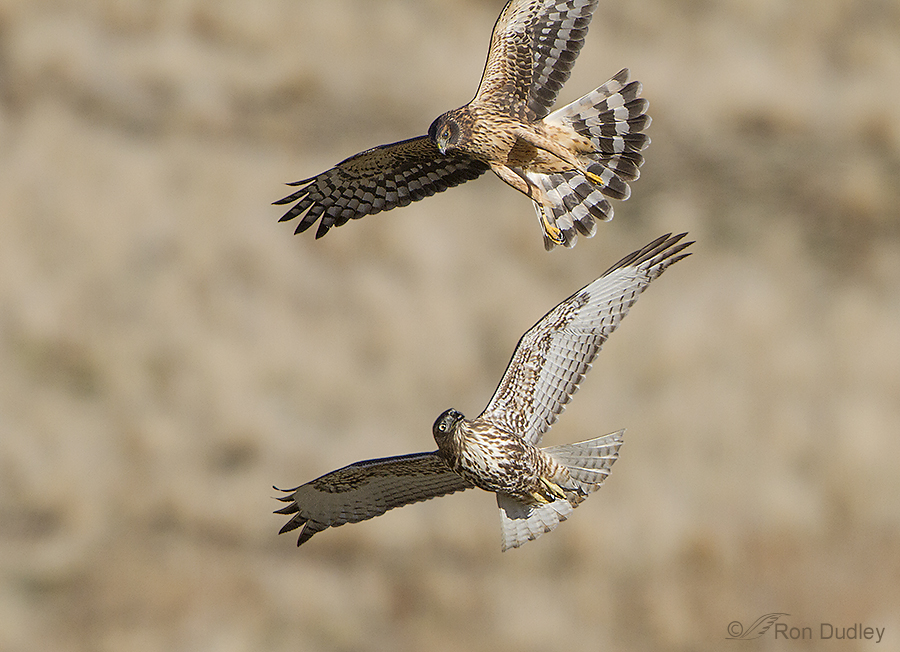
Northern Harriers are well-known for aggressive behavior toward larger raptors intruding on their territory but seldom chase off raptor species smaller than themselves. This interesting behavioral quirk apparently results from the ability of harriers to steal food from smaller raptors. It’s easier to pilfer prey from a smaller species than it is to catch it yourself so harriers let them hang around.
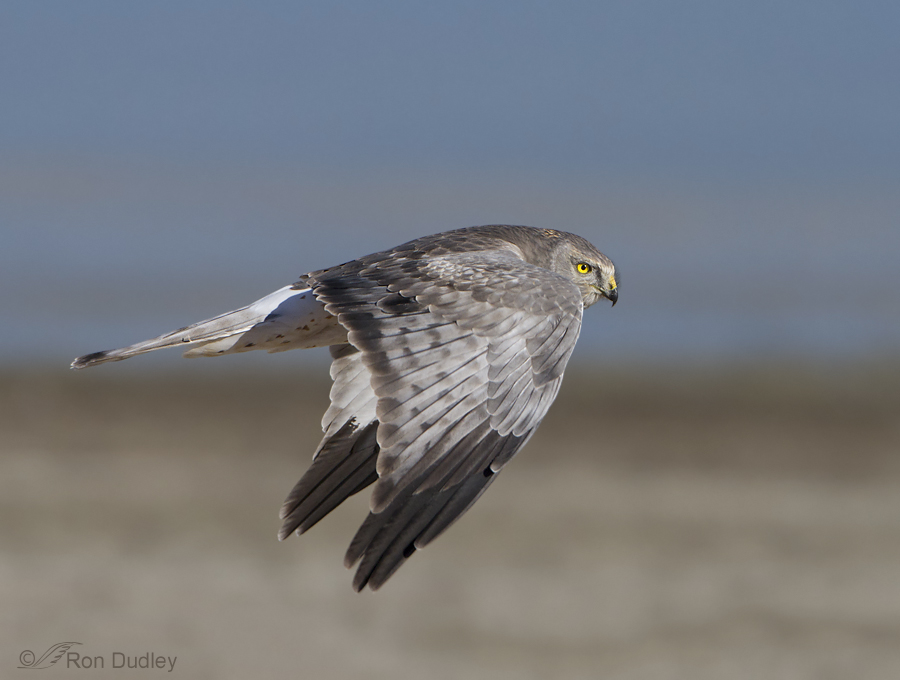
I have a strong affinity for Northern Harriers ( a little secret that’s difficult to conceal, given the vanity plates on my pickup). And though I love to photograph either sex there’s just something about the adult males that has a special appeal for me. Part of that attraction is probably the relative rarity of the adult male colors since the juvenile colors of both sexes resemble that of the female.
The males are called the “gray ghost” for good reason.
This hawk was attempting to gain altitude, thus the angled body with the wing raised high.
Baiting birds into close proximity for photographic purposes is a highly controversial subject, especially when it’s done to raptors. Often live bait such as store-bought mice are thrown in front of the photographer so that photos can be obtained of the bird in flight as it swoops down for the rodent.
Sometimes bird photographers have to be a little crafty to get the shot.
One of my favorite subjects is the male Northern Harrier. Because juveniles of both sexes are similar to the adult female, to the untrained eye most harriers look like females which is one of the reasons that many folks believe that they rarely see males – thus the name “Gray Ghost” for the ”elusive” adult male.
I’m hoping to get some feedback from my viewers on this one. Almost from day one with my bird photography I’ve labored under the impression that good eye contact with my subject is vital, almost essential, for a strong image. But that’s a premise I’m beginning to question to some degree. I don’t think there’s any question that a good look at the eye almost always makes for a stronger image. Direct eye contact is often even better. But no image is perfect – they all have strengths and weaknesses and I’m wondering if I sometimes put too much importance on eye contact over other desirable traits of an image. Below are three images of male Northern Harriers. Each has strengths and weaknesses. My previous impulse would have been to shun the last two shots because of a poor look at the eye, even though they have other strengths the first image does not. Now I’m not so sure… 1/4000, f/6.3, ISO 500, 500 f/4, natural light, not baited, set up or called in In this photo the bird has an interesting wing position and it’s nicely separated from the horizon below. And I have great eye contact but the bird is “only flying” and there’s nothing else interesting going on. And besides, it could be said that looking at the photographer isn’t really a “natural behavior” anyway… Note: If you’re wondering what the brown is at top right, the background is water, not sky, and the brown at top and bottom are land. I could clone or…
Typical winters are hard on birds in northern Utah (and elsewhere). But when the season is unusually frigid with lots of snow as we’re having this year they struggle even more to survive. All of these images have been taken since January 2 of this year. Upland game birds like this Chukar seem to have adapted to extreme conditions fairly well. This bird was all puffed up and sitting high on a rock to catch the earliest warming rays of the sun as it rose over the nearby Wasatch Mountains. Another upland game species that can apparently take harsh conditions quite well is the Ring-necked Pheasant (this is a female). They seem to forage for seeds at the base of plants where the snow isn’t as thick and their food is more readily available. But many other species have a difficult time and quite a few birds don’t survive until spring. The waterfowl that winter over here congregate in the few areas of open water where the flowing water is the last to freeze over. But when it gets very cold, even those small bits of open water freeze. I’ve seen ducks and coots frozen into the ice, some of them still alive. This female Green-winged Teal has just left one of the last unfrozen patches of water and is approaching an area of frost flowers. This Northern Flicker is using the protection of the underside of the eaves of a building on Antelope Island State Park. I thought the angled…
Just a single image today. I get my best Northern Harrier opportunities this time of year so I’ll likely be posting a few more shots of them over the next weeks. I hope you don’t tire of them… 1/1250, f/6.3, ISO 500, 500 f/4, 1.4 tc, natural light, not baited, set up or called in This bird was coming in for a landing but changed its mind right after this shot was taken five days ago. There were two dead, frozen fish near this pond that some of the harriers would pick at occasionally. They’d been there for most of the week and it’s my presumption that they were there naturally as refuge managers haven’t yet done the fish kill to destroy the damaging and invasive carp. I like the flight angle of the bird, the fully flared tail, the Phragmites stems in the corner and the pond reflections in the background. Ron Note: Some of you likely noticed that my blog was down from yesterday afternoon until later this morning – “hardware problems” at Network Solutions. I’ve not been a happy camper… Note #2 (1/7/13 @ 6:30pm). I just now learned that one of the “fish” I mentioned above turned out to be a chicken that someone had obviously used to bait eagles and maybe harriers. Of the two “fish” I mentioned above, one was obviously a fish but from my vantage point I could only see pink flesh with the second one and assumed it to be another fish. Instead it was a damned chicken. …