
Willet Take-off

Yesterday morning I found this Willet perched on one of the Tintic Quartzite boulders so common on the northern part of Antelope Island. The Willets are still active on the higher slopes of the island but it won’t be long until they’re spending most of their time along the shoreline and causeway.
Continue reading

Flaming Gorge Osprey – An Experiment That Worked

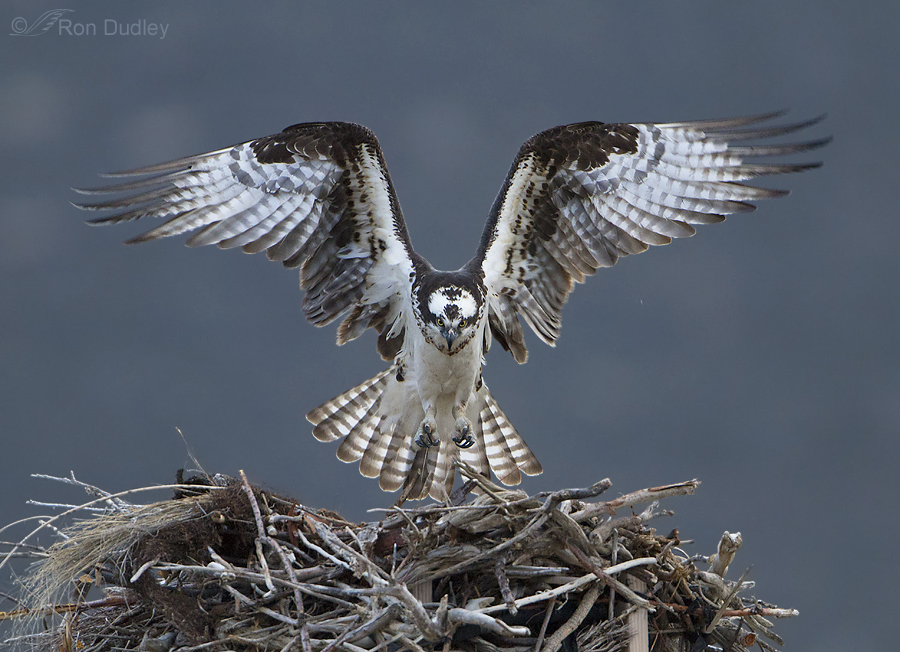
We returned home Thursday after spending three wonderful days camping at Flaming Gorge in NE Utah. This is very close to the view we had on most mornings from our campsites (two of them), though this image was taken the morning before the Osprey photo, below. As you’ll see, the lighting conditions were dramatically different…

Continue reading

An Unusual Perspective On An Avocet In Flight

In my experience American Avocets are difficult subjects to get in flight because of their speed and erratic flight patterns.  I’ve tried often but I sure don’t have many flight shots of the species that are very good.    1/4000, f/6.3, ISO 500, 500 f/4, 1.4 tc, natural light But I do like this one because of the sharpness of the bird, the position of the wings and feet, the nice eye contact, the pretty good exposure on a difficult subject and the somewhat unusual perspective with the viewer looking down on the bird that is flying mostly toward us. However I don’t particularly appreciate those two twigs behind the head so I’ve never posted this image before.  Much as I dislike significant cloning, getting rid of those twigs has sorely tempted me more than once but in the end I just couldn’t do it (though I’ll admit to playing with it a little bit…). So I’m asking for critique on the image as presented.  How much of a distraction do you think those two twigs are?  Sometimes I become obsessed with imperfections (as several of you have pointed out on previous posts) and can’t see the forest for the trees.  Perhaps the twigs aren’t as much of a problem as I think they might be. But either way, please be brutally honest. Thank you in advance for any thoughts on this you’d be willing to share. Ron Note:  There are conflicting visual cues on this image for rotation.  One would expect the twigs in the background to be vertical but when I rotate…

Continue reading

A Bird Photographer’s Conundrum – Red-tailed Hawk

Sunday morning we visited Utah’s west desert to see what we could turn up out there.  We found a pair of American Kestrels, a few Swainson’s Hawks, one Ferruginous Hawk, several Turkey Vultures apparently feeding on a dead calf and four Red-tailed Hawks.  But most were difficult to approach, in bad light or on ugly perches. Note: Some of this post may be of interest only to photographers.  I apologize in advance to those of you interested more in the results of bird photography than in the process…    1/2500, f/6.3, ISO 640, 500 f/4, natural light, not baited, set up or called in  But we did find the nesting pair of red-tails that I’ve posted about previously.  This bird was perched up a canyon near the nest where its mate was incubating  eggs.  I caught the hawk at lift-off…      1/2500, f/6.3, ISO 640, 500 f/4, natural light, not baited, set up or called in  and immediately after…      1/2500, f/6.3, ISO 640, 500 f/4, natural light, not baited, set up or called in and I was able to keep the bird in focus for a long burst of 22 images as it flew to my left.  The problem was that it had been perched above me on a hill so when it took off it mostly glided with its wings straight out and shaded underneath so many of those shots aren’t particularly interesting.      1/2500, f/6.3, ISO 640, 500 f/4, natural light, not baited, set up or called in This was the last image with any light under the wings….

Continue reading

Barn Owl In Flight Showing Dorsal Plumage Patterns and Alulae

Barn Owls have rather intricate plumage patterns and interesting color gradations on their dorsal (back) surfaces but they are rarely seen in their entirety in a single image. That’s partly because to get such an image you need to get them in flight with their wings out and tail spread which is very difficult to do since they’re primarily nocturnal.  And when you do manage a flight shot of one you’re usually looking up at them and can’t see much, if any, of the dorsal surface.  I thought this image fit the bill. especially with the bird looking down so that we can also see the colors and patterns on the top of the head.  Yes, I do wish I had more light in the eye…    1/1600. f/8, ISO 500 500 f/4, 1.4 tc, natural light, canvas added for composition, not baited, set up or called in Another thing I like about the image is the clear look at the alulae (plural of alula) or “bastard wings – the first digit or “thumb” on the leading edge of the wing. And this shot shows one more thing that intrigues me – the right alula (left in our view) is extended further forward and at a sharper angle than the one on the birds left, perhaps in compensation for the tipped angle of flight.  My research indicates that there’s still debate among experts about whether or not birds have muscular control of the alulae or they only respond to the pressure of air currents.   This owl has just spotted potential prey below and is flying very slowly as…

Continue reading

Mating Rituals Of The American Avocet

The moment I pulled up on this small pond at Bear River Migratory Bird Refuge last Friday I knew there’d be some opportunities for interesting behavioral shots. There were small groups of American Avocets and Black-necked Stilts that were excitedly chirping away and flying at each other in typical springtime behavior for these mixed flocks.

Continue reading

A Meadowlark Morning

Yesterday morning there was meadowlark magic on the island. They were almost everywhere, singing lustily from atop their sagebrush and rabbitbrush perches (and more than a few ugly signposts). Several times I just stopped the truck, turned the engine off and got outside to listen. You could hear dozens of them simultaneously – some very close, some far away and others everywhere in between. Their melodious calls literally bounced off the hilltops.

Continue reading

West Desert Red-tailed Hawk

I spotted this adult Red-tailed Hawk perched on the side of a hill and hoped to get some take-off shots as it lifted off and then perhaps some full flight images. I always try to anticipate direction of take-off in this type of situation and I was pretty sure it would lift off to my left in the direction it’s facing. But I was wrong…

Continue reading

A Chukar Sentry Abandons Its Post

I’ve never been able to get a Chukar in flight or taking off, largely because they’re so hesitant to fly.  Even when they’re perched on an elevated rock they usually just hop to the ground when they’re ready to leave.  And when they do fly, typical of most upland game birds, they fly very fast, low to the ground and away from you which makes for an almost impossible target. But I got one yesterday morning, taking off.    1/5000, f/5.6, ISO 500, 100-400 @260mm, natural light This bird was acting as a sentry (also called a sentinel) for a small group of other Chukars nearby.  It’s observation perch of choice was a sign post that was high enough that it had to actually fly when it decided to leave.  I was too close to this bird for my 500mm lens so I quickly grabbed my 100-400 zoom lens and when it looked like it might be thinking of taking off I zoomed back far enough to give the Chukar enough room to fly into. I had plenty of light for a shutter speed fast enough to freeze the wings of even this buzz-saw flier (those relatively short wings on such a chunky bird really have to churn to get it airborne) and was lucky enough to catch the wings in a position I like.  A more appealing perch would have been nice but I’m pleased with the way most everything else turned out. Ron

Continue reading

The Alula (bastard wing) Of A Kestrel In Flight

Many extinct and ancient relatives of modern birds had alulae, as do flies (insects of order diptera). I find it fascinating that evolutionary selection pressure has produced this structure in such diverse and relatively unrelated groups as birds and some flying insects. And that man has (once again) copied nature to solve a modern problem.

Continue reading

Short-eared Owl With Prey, Coming At Me

I’m always happy when I can get decent images of an owl in flight.  If they’re carrying prey it’s a bonus.  And if the bird is flying toward me I often consider it icing on the cake – partly because those kinds of shots are so very often baited, decoyed, set up or called in.  As always for me, these were not. I’ve posted one of these shots before but I hoped it might be interesting for some to see a sequence of images as this adult male Short-eared Owl flew toward me with a vole for its mate before veering off to my right.    1/1000, f/5.6, ISO 800, 500 f/4, 1.4 tc, natural light, not baited, set up or called in This first image shows less detail and image quality because the owl was further away as it began to approach me but I decided to include it for context in the sequence.  The lower background is sagebrush flats while the upper blues are Montana’s Centennial Mountains in shade.       1/1250, f/5.6, ISO 800, 500 f/4, 1.4 tc, natural light, not baited, set up or called in Four frames later the owl was significantly closer and flew almost directly at me before veering off – a pattern it followed more than once.  I’d guess that it was his way of checking me out for any potential threat before delivering the vole.       1/1000, f/5.6, ISO 800, 500 f/4, 1.4 tc, natural light, not baited, set up or called in  Which he’s doing intently here.  Eye contact can’t be much…

Continue reading

Male Northern Harrier – The Gray Ghost

One of my favorite subjects is the male Northern Harrier. Because juveniles of both sexes are similar to the adult female, to the untrained eye most harriers look like females which is one of the reasons that many folks believe that they rarely see males – thus the name “Gray Ghost” for the ”elusive” adult male.

Continue reading