Tag: asio flammeus
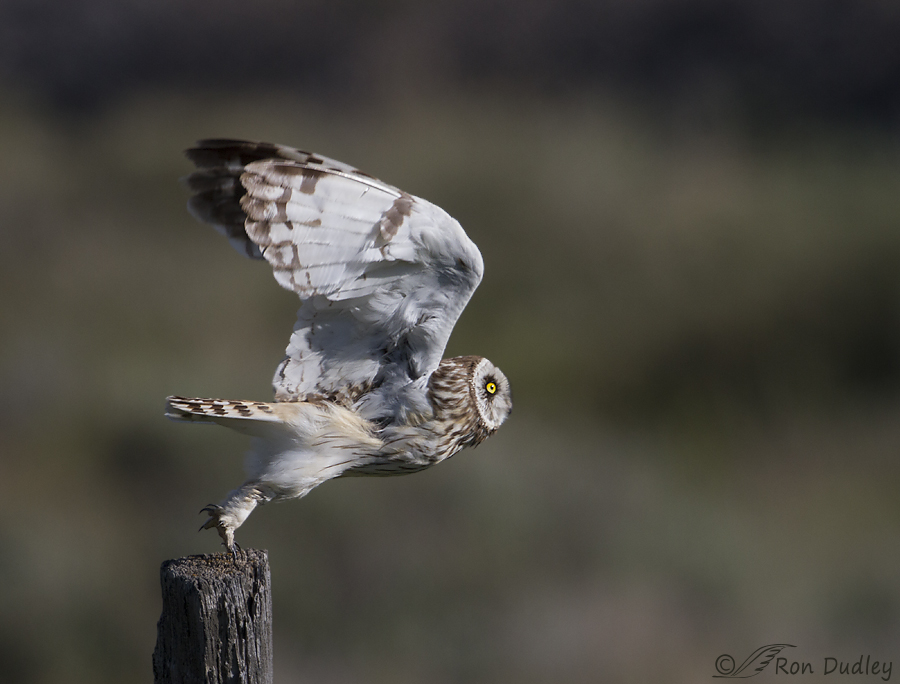
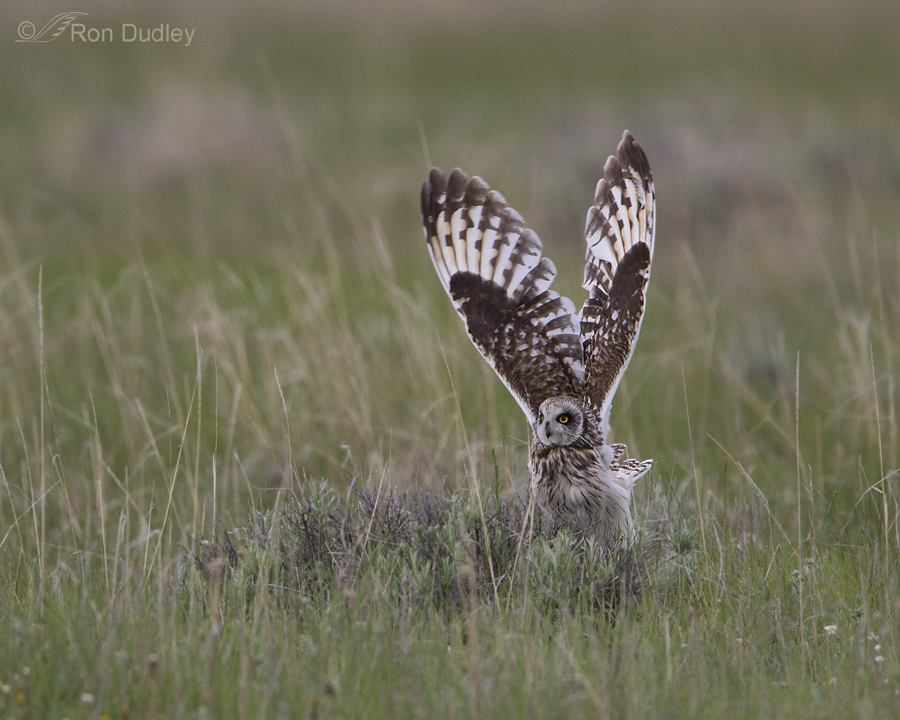
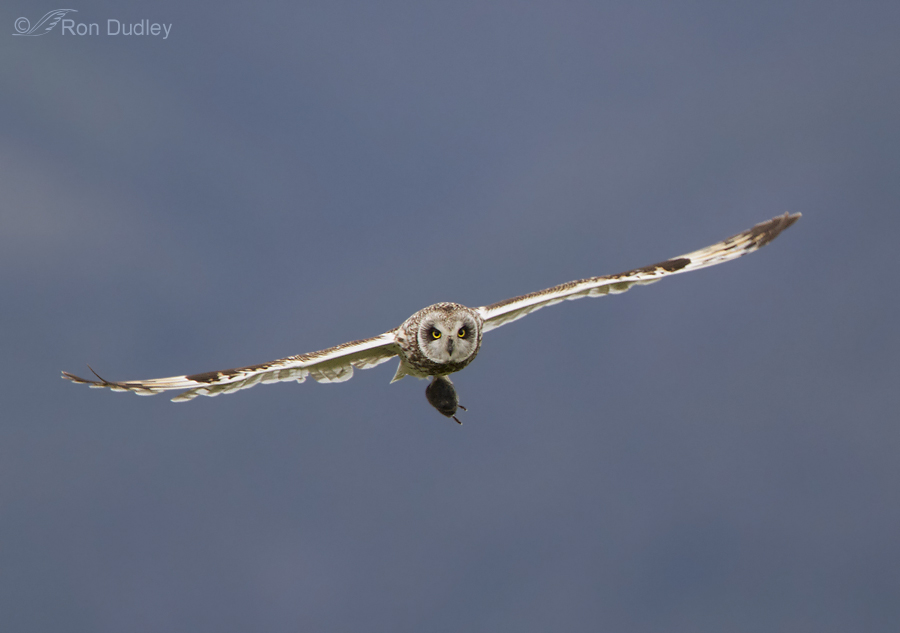
Short-eared Owl Pushing Off With His Talon-tips
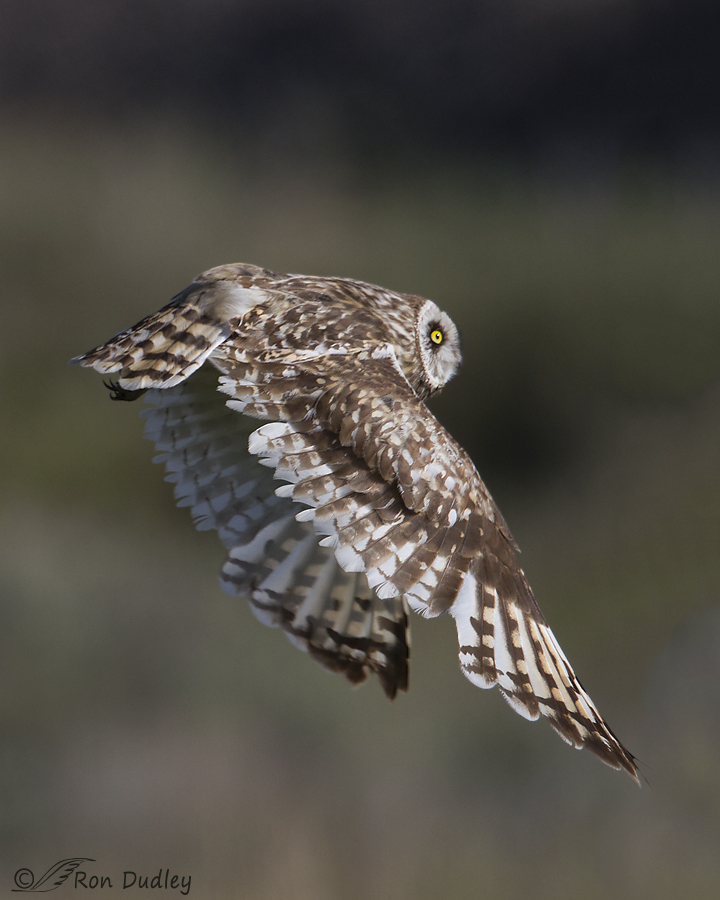
On our Montana trips I’m always looking for Short-eared Owls but sadly, unlike just a few years ago when they were relatively abundant, they’re virtually nonexistent in the Centennial Valley these days. I’m pretty much convinced their absence is largely due to all the cattle (mostly yearlings who are the juvenile delinquents of the bovine world and they really tore up the place) that were allowed to graze Red Rock Lakes National Wildlife Refuge a couple of years ago.
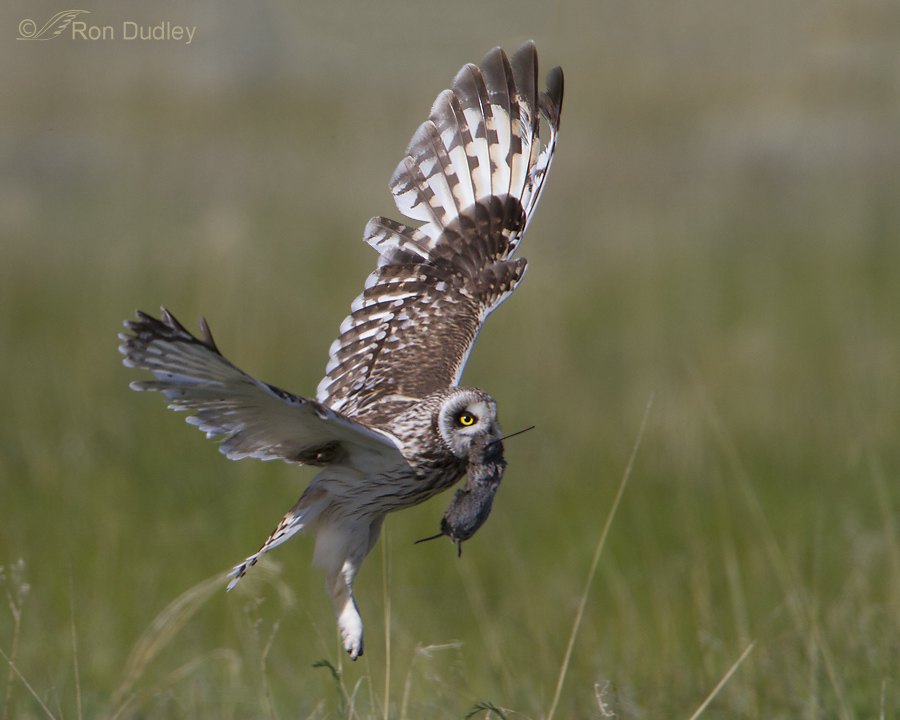
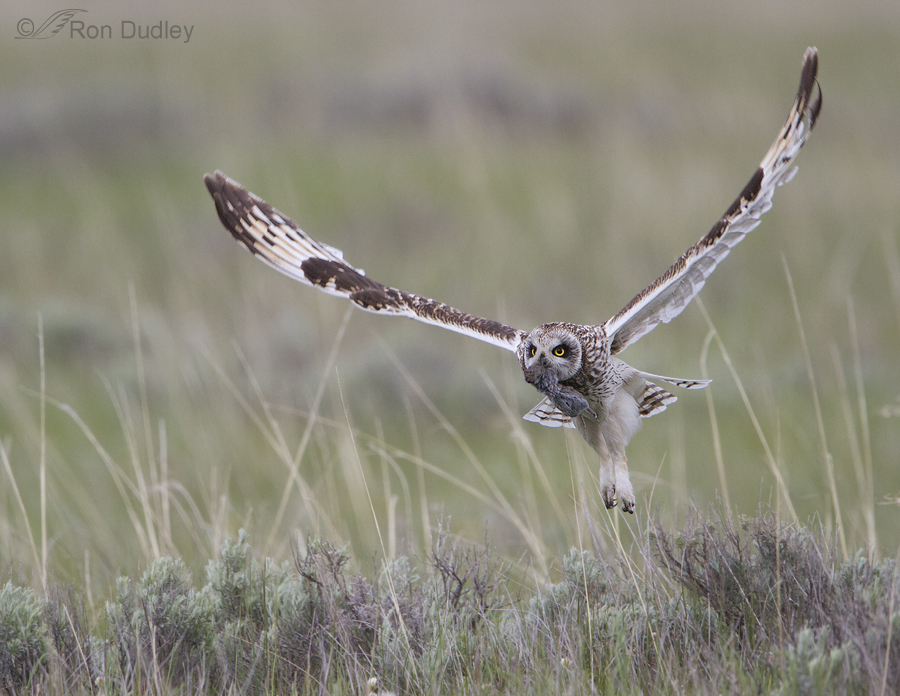
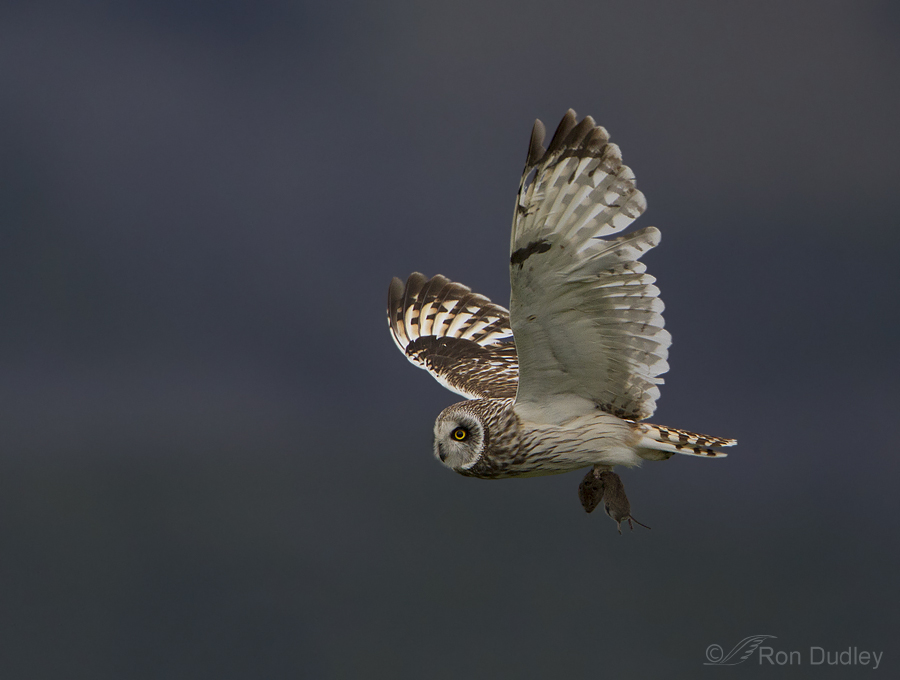
Short-eared Owl With Prey
Short-eared Owl With Huge Vole (or is it something else?)
Short-eared Owl Flight Sequence In Habitat
Short-eared Owl Carrying A Vole In Its Beak (for a change)
Short-eared Owls And The “Handedness Phenomenon”
Handedness is a preference for using one hand (or limb) as opposed to the other. It’s a phenomenon many of us associate strictly with humans but other vertebrates can also show handedness, including birds. For example, many parrot species have a strong and consistent preference for using their left foot when bringing food to the beak.
Based on my own observations in the field I believe that Short-eared Owls may also display handedness.
The Interdependence Of Short-eared Owls And Voles
Though Short-eared Owls are one of the worlds most widespread owls, the species is highly dependent on the density of its small mammal prey, voles in particular. Since vole populations fluctuate wildly, Short-eared Owls show significant local variation in numbers and reproductive success from year to year.
Owl Head-on Flight Shots Don’t Have To Be Baited
Head-on flight shots of owls have often been baited using live, store-bought mice. I’m of the opinion that baiting raptors is not only unethical (a debate I’d prefer to not get into here) but unnecessary for those kinds of images. However they typically require patience, intimate knowledge of the subject, a keen eye for interpreting behavior and even a little luck.
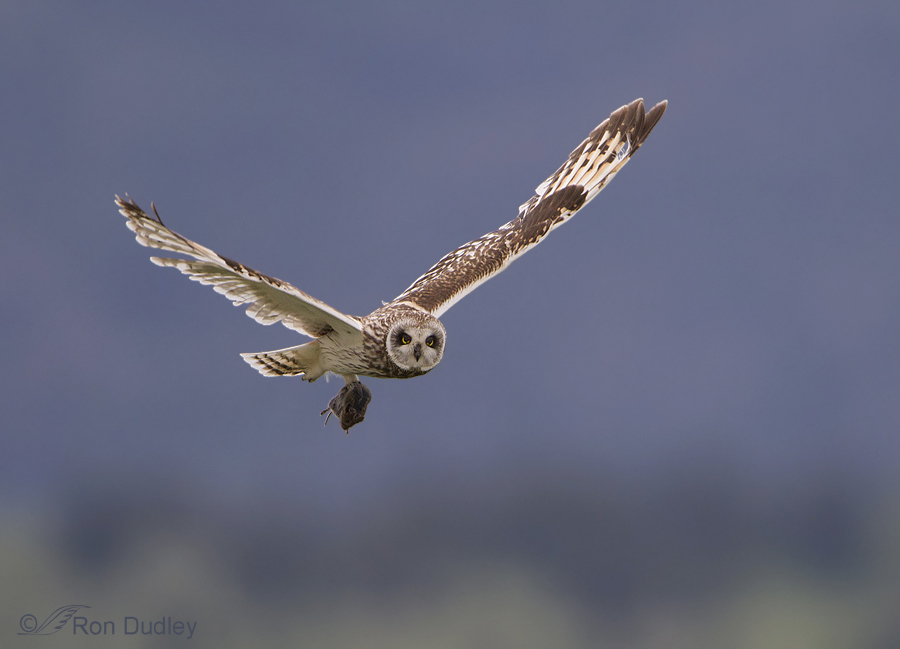
Short-eared Owl In Flight With Prey
This sequence is from the summer of 2010 in southwest Montana. The adult male was kept busy hunting and delivering voles to his family of two chicks and the female on the nest.
A Close Encounter With A Short-eared Owl
This was a day I’m sure I’ll never forget – my first up close experience with an owl of any species in the wild. I’d only been photographing birds for about a year and I still had a lot to learn – about my gear, about technique and about my avian subjects.
Fighting Male Short-eared Owls
I’ve posted once before about the fighting Male Short-eared Owls I photographed in south-west Montana but I spent several days with these sparring birds and thought they deserved some more attention on my blog.
Short-eared Owl With Prey, Coming At Me
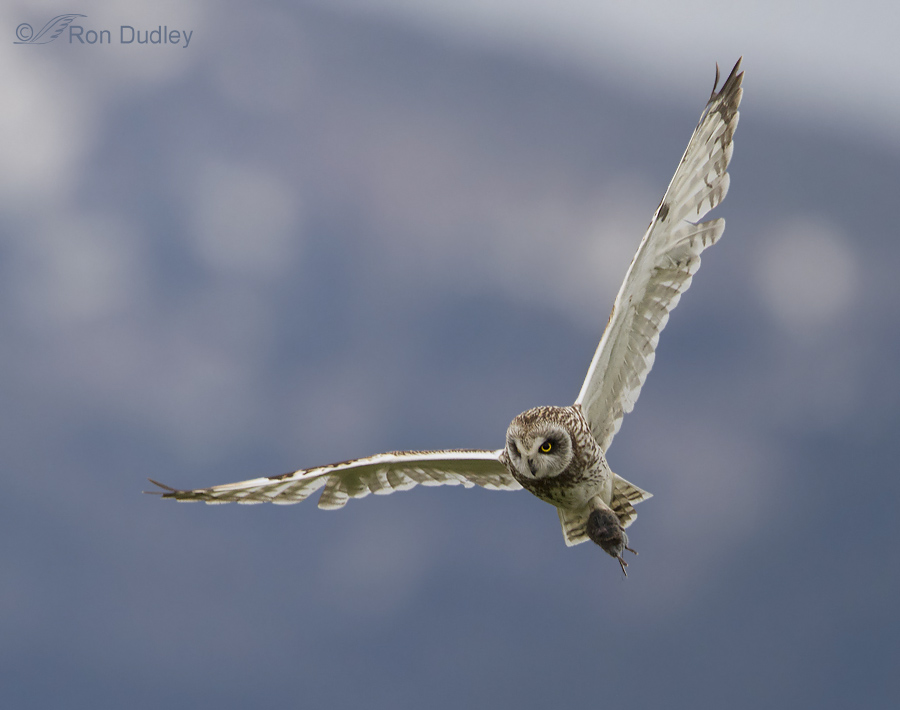
I’m always happy when I can get decent images of an owl in flight. If they’re carrying prey it’s a bonus. And if the bird is flying toward me I often consider it icing on the cake – partly because those kinds of shots are so very often baited, decoyed, set up or called in. As always for me, these were not. I’ve posted one of these shots before but I hoped it might be interesting for some to see a sequence of images as this adult male Short-eared Owl flew toward me with a vole for its mate before veering off to my right. 1/1000, f/5.6, ISO 800, 500 f/4, 1.4 tc, natural light, not baited, set up or called in This first image shows less detail and image quality because the owl was further away as it began to approach me but I decided to include it for context in the sequence. The lower background is sagebrush flats while the upper blues are Montana’s Centennial Mountains in shade. 1/1250, f/5.6, ISO 800, 500 f/4, 1.4 tc, natural light, not baited, set up or called in Four frames later the owl was significantly closer and flew almost directly at me before veering off – a pattern it followed more than once. I’d guess that it was his way of checking me out for any potential threat before delivering the vole. 1/1000, f/5.6, ISO 800, 500 f/4, 1.4 tc, natural light, not baited, set up or called in Which he’s doing intently here. Eye contact can’t be much…
Short-eared Owl Tattoo – A Work In Progress
Something a little different from me this time… In the past I’ve had a wide variety of requests for use of my images, including such disparate projects as prints, magazine and book publications, non-profit scientific and educational organizations (which I nearly always allow without a fee), fancy rubber stamps, uses by painters and other artists as subjects for their work, an image to be lacquered into the top of the communal dining table of a new fire station in Temecula, California and several of my Northern Harrier (a type of hawk) images have been used in the AV8B Harrier (jump-jet) pilot training software at the Naval Air Weapons Station at China Lake, California. But a few weeks ago I got something new for me – a request to use one of my avian images for a very large, “photo – realistic” tattoo. Jenna, from New Zealand, contacted me and requested to use this image of a female Short-eared Owl in flight (with brood patch visible on the belly) as the basis for the tattoo. Her tattoo artist, Matt Jordan of Ship Shape Tattoo, Orewa, New Zealand, needed a high-resolution version of the image in order to get enough detail to make the very large tattoo photo-realistic. Even though this shot was taken in extremely low light and doesn’t have quite as much detail as most of my photos, in the end there was enough. Matt Jordan is apparently very talented and in high demand so it took Jenna several months to get the project started. It’s a long, drawn out and painful process. Jenna’s first session with Matt lasted for 6…
Short-eared Owl Perch-hunting
A couple of weeks ago I posted two shots of this Short-eared Owl perched on this frost-covered rabbitbrush. In those images the bird was reacting to me which isn’t really a natural behavior. A direct look toward the viewer from those strikingly colorful eyes is certainly riveting but more natural behaviors also appeal to me. 1/500, f/8, ISO 500, 500 f/4, 1.4 t c, natural light, not baited, set up or called in Short-eared Owls hunt primarily “on the wing” – they’re typically not “sit and wait” hunters like many other raptors. But this bird noticed what was probably a vole at the base of the rabbitbrush and its reaction to it was obvious. It stared intently down for some time which resulted in a natural pose that I like. Ron
Short-eared Owl Pushing Off With His Talon-tips
On our Montana trips I’m always looking for Short-eared Owls but sadly, unlike just a few years ago when they were relatively abundant, they’re virtually nonexistent in the Centennial Valley these days. I’m pretty much convinced their absence is largely due to all the cattle (mostly yearlings who are the juvenile delinquents of the bovine world and they really tore up the place) that were allowed to graze Red Rock Lakes National Wildlife Refuge a couple of years ago.
Short-eared Owl With Prey
Short-eared Owl With Huge Vole (or is it something else?)
Short-eared Owl Flight Sequence In Habitat
Short-eared Owl Carrying A Vole In Its Beak (for a change)
Short-eared Owls And The “Handedness Phenomenon”
Handedness is a preference for using one hand (or limb) as opposed to the other. It’s a phenomenon many of us associate strictly with humans but other vertebrates can also show handedness, including birds. For example, many parrot species have a strong and consistent preference for using their left foot when bringing food to the beak.
Based on my own observations in the field I believe that Short-eared Owls may also display handedness.
The Interdependence Of Short-eared Owls And Voles
Though Short-eared Owls are one of the worlds most widespread owls, the species is highly dependent on the density of its small mammal prey, voles in particular. Since vole populations fluctuate wildly, Short-eared Owls show significant local variation in numbers and reproductive success from year to year.
Owl Head-on Flight Shots Don’t Have To Be Baited
Head-on flight shots of owls have often been baited using live, store-bought mice. I’m of the opinion that baiting raptors is not only unethical (a debate I’d prefer to not get into here) but unnecessary for those kinds of images. However they typically require patience, intimate knowledge of the subject, a keen eye for interpreting behavior and even a little luck.
Short-eared Owl In Flight With Prey
This sequence is from the summer of 2010 in southwest Montana. The adult male was kept busy hunting and delivering voles to his family of two chicks and the female on the nest.
A Close Encounter With A Short-eared Owl
This was a day I’m sure I’ll never forget – my first up close experience with an owl of any species in the wild. I’d only been photographing birds for about a year and I still had a lot to learn – about my gear, about technique and about my avian subjects.
Fighting Male Short-eared Owls
I’ve posted once before about the fighting Male Short-eared Owls I photographed in south-west Montana but I spent several days with these sparring birds and thought they deserved some more attention on my blog.
Short-eared Owl With Prey, Coming At Me
I’m always happy when I can get decent images of an owl in flight. If they’re carrying prey it’s a bonus. And if the bird is flying toward me I often consider it icing on the cake – partly because those kinds of shots are so very often baited, decoyed, set up or called in. As always for me, these were not. I’ve posted one of these shots before but I hoped it might be interesting for some to see a sequence of images as this adult male Short-eared Owl flew toward me with a vole for its mate before veering off to my right. 1/1000, f/5.6, ISO 800, 500 f/4, 1.4 tc, natural light, not baited, set up or called in This first image shows less detail and image quality because the owl was further away as it began to approach me but I decided to include it for context in the sequence. The lower background is sagebrush flats while the upper blues are Montana’s Centennial Mountains in shade. 1/1250, f/5.6, ISO 800, 500 f/4, 1.4 tc, natural light, not baited, set up or called in Four frames later the owl was significantly closer and flew almost directly at me before veering off – a pattern it followed more than once. I’d guess that it was his way of checking me out for any potential threat before delivering the vole. 1/1000, f/5.6, ISO 800, 500 f/4, 1.4 tc, natural light, not baited, set up or called in Which he’s doing intently here. Eye contact can’t be much…
Short-eared Owl Tattoo – A Work In Progress
Something a little different from me this time… In the past I’ve had a wide variety of requests for use of my images, including such disparate projects as prints, magazine and book publications, non-profit scientific and educational organizations (which I nearly always allow without a fee), fancy rubber stamps, uses by painters and other artists as subjects for their work, an image to be lacquered into the top of the communal dining table of a new fire station in Temecula, California and several of my Northern Harrier (a type of hawk) images have been used in the AV8B Harrier (jump-jet) pilot training software at the Naval Air Weapons Station at China Lake, California. But a few weeks ago I got something new for me – a request to use one of my avian images for a very large, “photo – realistic” tattoo. Jenna, from New Zealand, contacted me and requested to use this image of a female Short-eared Owl in flight (with brood patch visible on the belly) as the basis for the tattoo. Her tattoo artist, Matt Jordan of Ship Shape Tattoo, Orewa, New Zealand, needed a high-resolution version of the image in order to get enough detail to make the very large tattoo photo-realistic. Even though this shot was taken in extremely low light and doesn’t have quite as much detail as most of my photos, in the end there was enough. Matt Jordan is apparently very talented and in high demand so it took Jenna several months to get the project started. It’s a long, drawn out and painful process. Jenna’s first session with Matt lasted for 6…
Short-eared Owl Perch-hunting
A couple of weeks ago I posted two shots of this Short-eared Owl perched on this frost-covered rabbitbrush. In those images the bird was reacting to me which isn’t really a natural behavior. A direct look toward the viewer from those strikingly colorful eyes is certainly riveting but more natural behaviors also appeal to me. 1/500, f/8, ISO 500, 500 f/4, 1.4 t c, natural light, not baited, set up or called in Short-eared Owls hunt primarily “on the wing” – they’re typically not “sit and wait” hunters like many other raptors. But this bird noticed what was probably a vole at the base of the rabbitbrush and its reaction to it was obvious. It stared intently down for some time which resulted in a natural pose that I like. Ron