
Juvenile Burrowing Owls Watching For “Incoming”
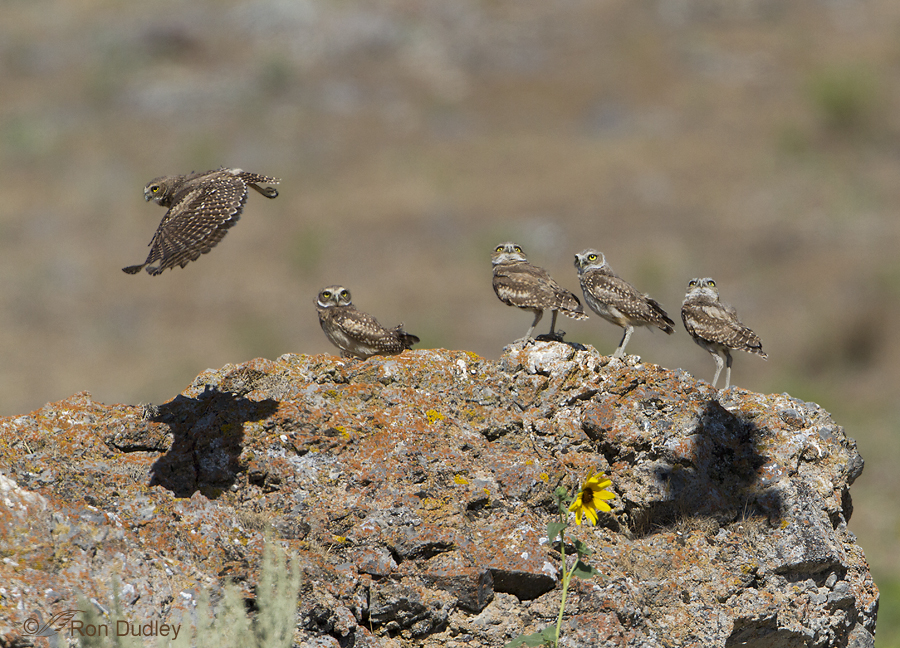
The burrow of these owls is at the base of this huge lichen-encrusted rock and the owls seemed to enjoy perching on it. These juveniles were having a blast with their flight maneuvers.

The burrow of these owls is at the base of this huge lichen-encrusted rock and the owls seemed to enjoy perching on it. These juveniles were having a blast with their flight maneuvers.
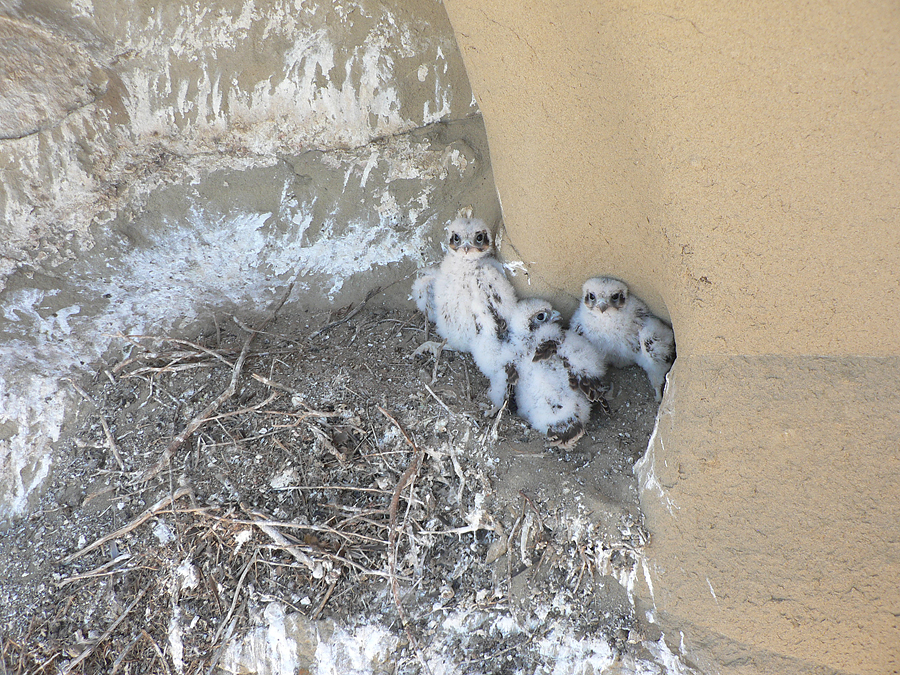
Two days ago I posted about a very tame juvenile male Prairie Falcon I photographed last week in the Centennial Valley of Montana. The bird had two bands and I was extremely curious about where, when and why the falcon was banded and by whom so I asked for any insight my readers might have about the bands. Several of you jumped in with advice and suggestions, for which I’m much appreciative. But it was the superb sleuthing of my friend Mike Shaw that paid huge dividends. Mike did some research and learned that the colored band on the falcon (left foot) was issued to Doug Bell, Wildlife Program Manager for East Bay Regional Park District out of Oakland, California. On Tuesday, figuring that Doug might be interested in knowing that his California bird was now in the wilds of Montana, I emailed him with a link to that blog post and an offer to supply any more information about my encounter with that bird that he’d be interested in. I also asked him if he might tell me a little about his experience with the falcon. Yesterday Doug responded generously with information and photos. Since many of my readers expressed an interest in knowing about the history of this young bird I decided to update you with a new post rather than add an addendum to the previous post that many might not see. Besides, there’s a lot of new “stuff” here. Image property of East Bay Regional Park District – used by permission Doug and his team banded “my” Prairie Falcon…
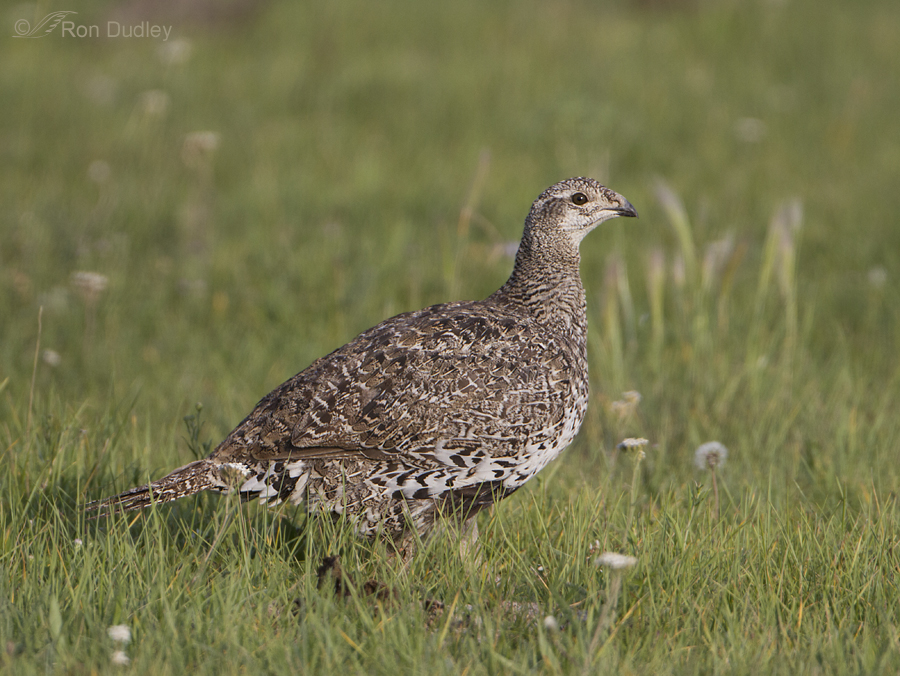
I was driving the dirt roads while on the lookout for raptors (mostly) when out of the corner of my eye to the far right I saw (just barely) a flock of Mallards flush up from the barrow pit next to the road and just a few feet away. I gave them a quick glance and drove on but a couple of seconds later Mia hollered out from the back seat her patented “Stop, bird!”, which I immediately did. Turned out they weren’t Mallards, they were Sage Grouse – about a dozen of them.
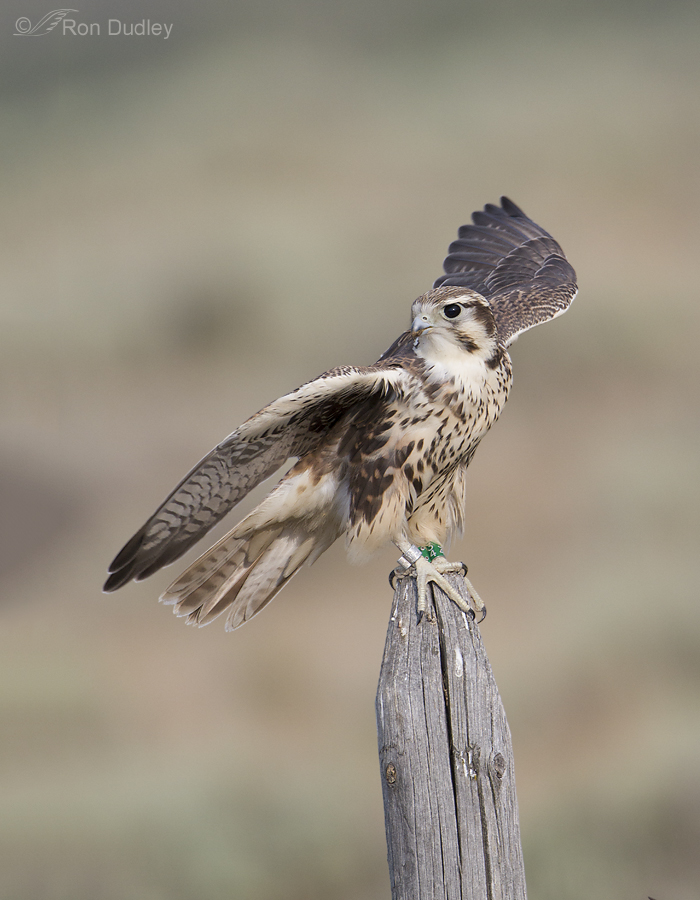
In yesterday’s post about grasshopper-eating Prairie Falcons I promised that today’s post would also be about Prairie Falcons. It is, but only one of them – probably the most approachable larger falcon that I’ve ever encountered in the wild.
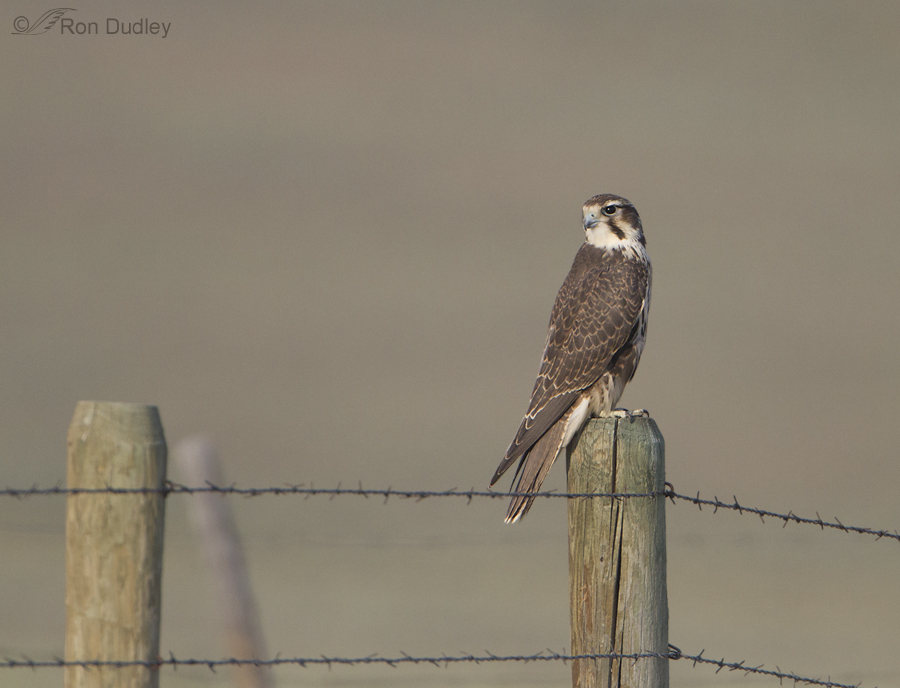
I learned something last week in Montana’s Centennial Valley – Prairie Falcons eat insects.
In the past I’ve only seen them eat birds and small mammals and cursory research had backed up that observation but if you dig a little deeper in your research (Birds of North America Online, for example) you’ll find mention of lizards and insects being included in their diet. My friend (master falconer) Mark Runnels says that “Prairie Falcons will eat anything. In really bad years I have even heard of them feeding on carrion. You’ll never see a Peregrine do that!”
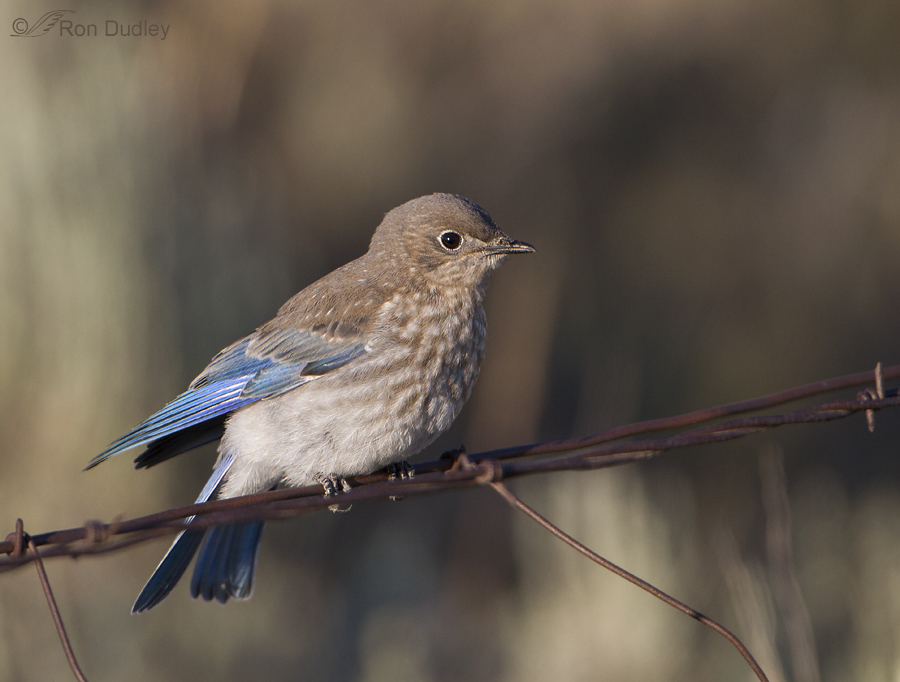
I often photograph Mountain Bluebirds on my Montana trips but I’ve seldom had the opportunity to work with juveniles. That changed last week when we found a young bird hunting from a fence in early morning light.
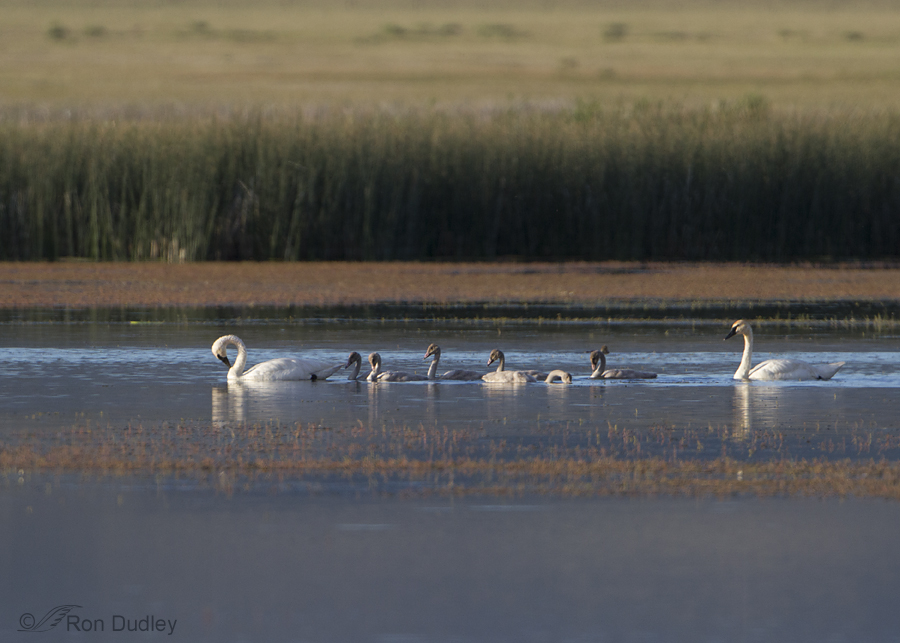
Trumpeter Swans are the largest of all North American waterfowl, weighing up to 30 pounds and having a wingspan of as much as 8 feet. It’s hard to imagine that by the 1930’s this species had been almost wiped out. In 1949 the Director of the U.S. Fish and Wildlife Service said that the Trumpeter Swan was “the fourth rarest bird now remaining in America”. But thankfully recent intense swan restoration and management programs have brought the species back from the brink of extinction.
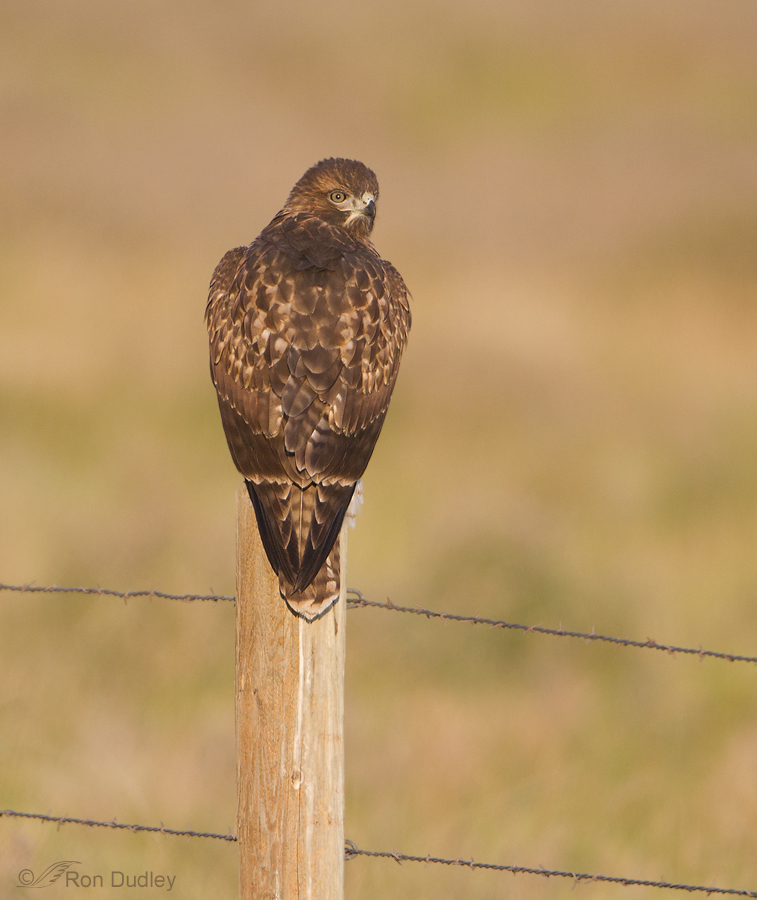
Typically I don’t have high hopes of getting any decent shots during the almost 30 mile drive on a dirt/gravel road from our usual camping spot to the first paved road. Imagine if you can the noise, the dust and the bird-scattering spectacle of my pickup and camping trailer rattling down the rocky road – a situation not conducive to getting anywhere near spooky birds.
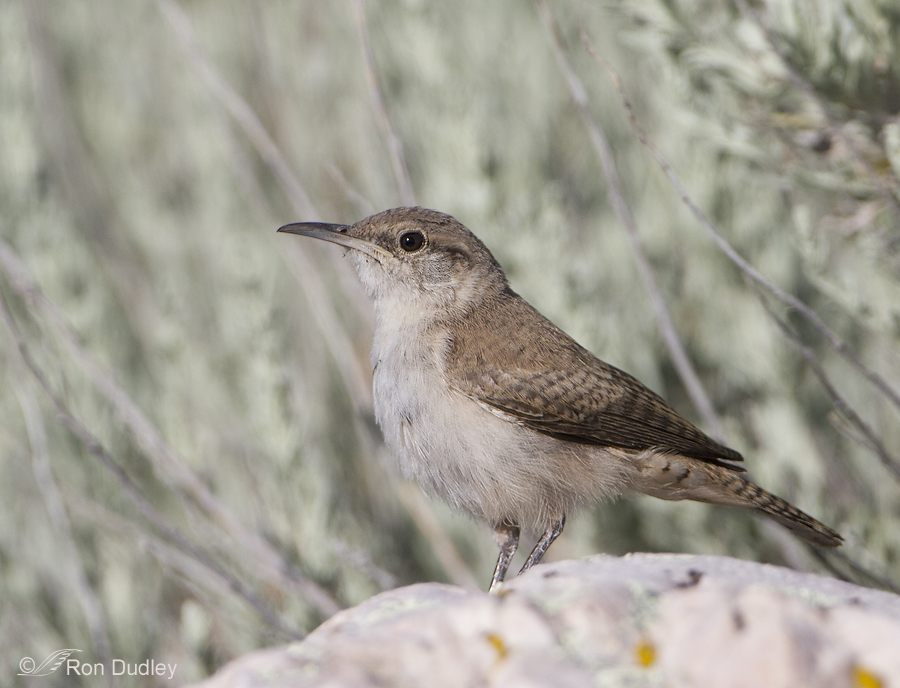
I’ll be the first to admit that I’m not particularly skilled in identifying some of the songbirds. This wren is a case in point. I’m unsure if it’s a Rock Wren or a House Wren.
So, a little help from my friends?…
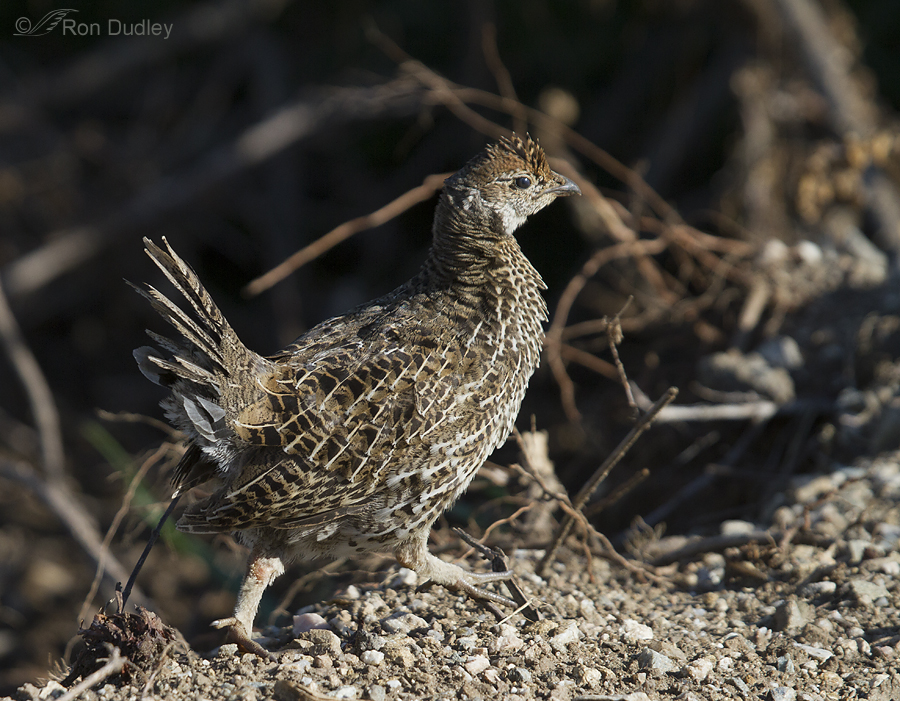
Historically, Blue Grouse have been divided into two major groups – Dusky Grouse and Sooty Grouse. But bases on recent mitochondrial DNA sequencing studies as well as on behavioral and distribution information, both groups are now considered to be separate species.
I’m confused about a color change I’m seeing in Loggerhead Shrikes. 1600, f/7.1, ISO 640, 500 f/4, 1.4 tc, natural light, image taken 4/26/13 on Antelope Island For most of the year the adults I see have a white or pale ventral surface (belly, breast and sides) which is exactly as described in the field guides and other resources I have access to. 2500, f/6.3, ISO 640, 500 f/4, natural light, image taken 7/3/13 on Antelope Island But beginning in about early July there’s a fairly dramatic change that is not addressed in my field guides. That white plumage turns significantly darker and an almost black area on the upper breast appears. This is about the time they’re fledging chicks around here and when I first noticed this several years ago I wondered if the birds were simply becoming “dirty” as they scurried around trying to feed and care for those very demanding youngsters. But now I’m pretty sure that’s not the case. All of the adult Loggerhead Shrikes I see go through this change to some degree or another. 3200, f/5.6, ISO 640, 500 f/4, 1.4 tc, natural light, image taken 7/14/13 on Antelope Island Here’s another (pretty silly looking) example. This is also the time of year when these birds are molting so I wondered if I was somehow seeing black skin (some birds do have black skin) through very skimpy plumage that time of year and I was somehow mistaking it for black feathers. But as you can see in this preening, molting adult, their skin…
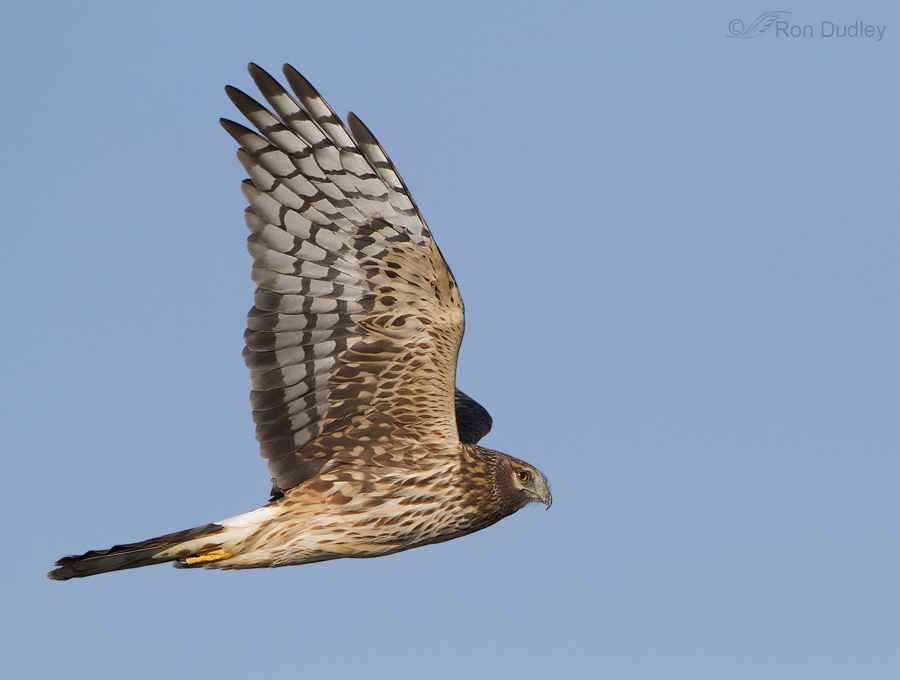
This hawk was attempting to gain altitude, thus the angled body with the wing raised high.
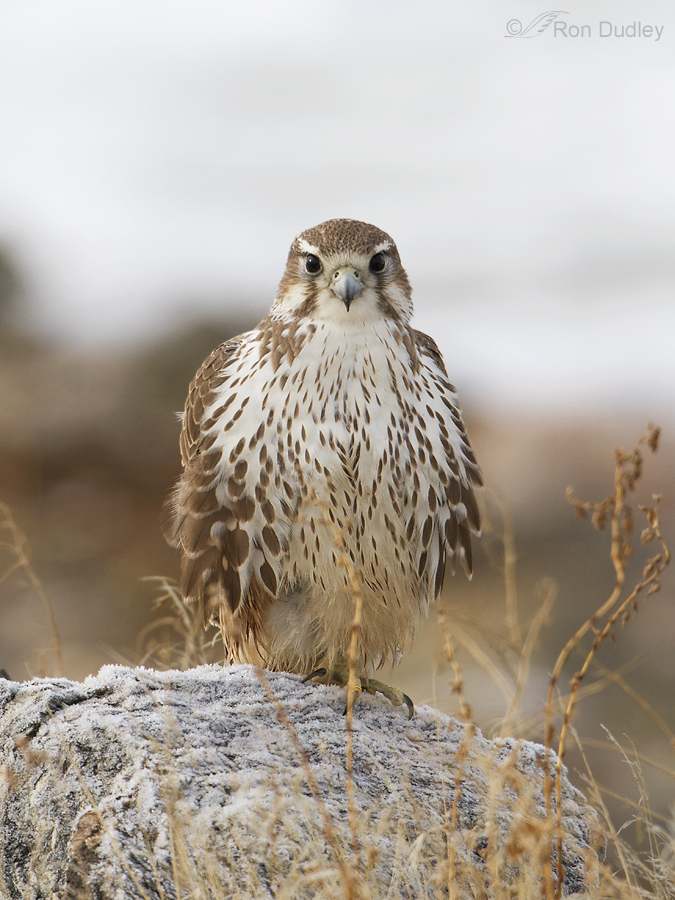
With all the incredibly hot weather we’ve had for most of the last few weeks I was ready to post something that reminded me that it really can get cold around here…
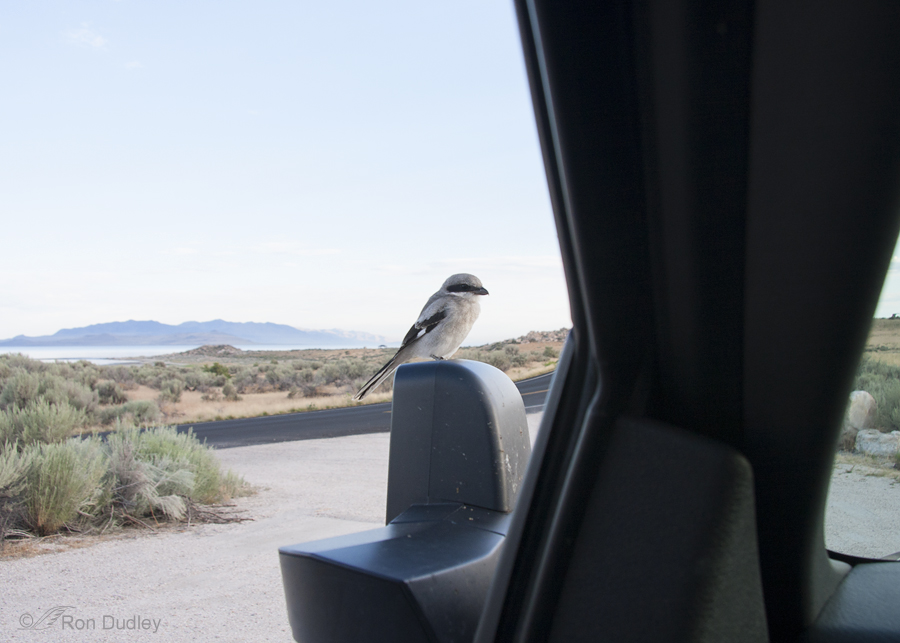
These young birds loved clamoring around on the hood of my pickup. They would look at their reflections, pick at smashed bugs and just generally act like inquisitive kids. It wasn’t unusual to hear a bird clicking about on my roof at the same time one of its siblings was on my hood.
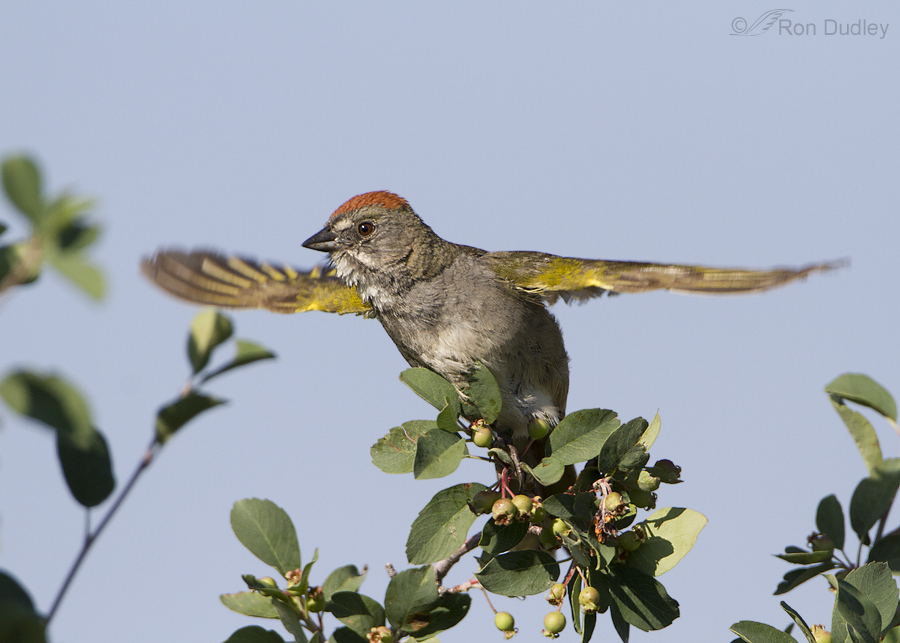
As I mentioned on this blog a couple of months ago I’ve been after quality images of the Green-tailed Towhee for years but they’ve always eluded me. This species has a special place in my heart and memory because it was my field project study species back in 1969 when I took a college ornithology class at the University of Utah from the legendary Dr. William H. Behle. That class provided the inspiration for my almost life-long love of birds. I’ve been trying to get some nice images of them for years now but their secretive nature and my bad luck always got in the way.